
To schedule a free phone consult please follow the link here

Why Can I Understand My Child When Other People Can't?
Author: McKenzi Donahue B.S. SLP-A (Check Out Her Staff Page Here)
Have you ever been out with your child when they say something, only to have someone look at you and ask, “What did they say?” meanwhile, you understood them perfectly. Maybe you even find yourself automatically “translating” for your child when they talk to grandparents, teachers, friends, or other people in the community. If this sounds familiar, you’re not alone! Parents and caregivers often understand their child’s speech much better than someone who doesn’t spend as much time with them. So, why does this happen?
A lot of it has to do with speech intelligibility and the difference between familiar and unfamiliar listeners.
You’ve Learned Your Child’s “Language”
Think about how much time you spend listening to your child talk. You know their favorite foods, toys, TV shows, friends, routines, and stories. You also hear the way they pronounce words every single day. Without even realizing it, you’ve probably learned your child’s unique speech patterns. For example, maybe your child says “tat” instead of “cat.” You’ve heard them say it hundreds of times, so when they point across the room and say, “Look at the tat!” you immediately know what they mean. However, someone meeting your child for the first time might not. This is the difference between a familiar listener and an unfamiliar listener.
A familiar listener is someone who regularly communicates with your child, such as a parent, sibling, caregiver, or teacher. An unfamiliar listener is someone who has little or no experience with your child’s speech, such as a new classmate, substitute teacher, cashier, or another parent at the playground.
The American Speech-Language-Hearing Association (ASHA) explains that how understandable a child is, or their speech intelligibility, can be affected by several factors, including how familiar the listener is with the speaker and whether the listener has other clues to help understand the message (American Speech-Language-Hearing Association (ASHA, n.d.). In other words, you have an advantage! You know your child, you know the context, and you’ve had lots of practice listening to the way they talk.
But Why Is My Child Difficult for Other People to Understand?
Sometimes, difficulty being understood is related to a speech sound disorder. Children naturally make speech mistakes while learning to talk. Speech sounds develop gradually, and we don't expect a young child to pronounce every sound perfectly. However, when certain errors continue longer than expected, happen frequently, or make a child especially difficult to understand, an evaluation by a speech-language pathologist (SLP) may be helpful. When talking about speech sound disorders, you may hear an SLP use words like articulation and phonology. They sound complicated, but the difference is easier to understand than you might think!
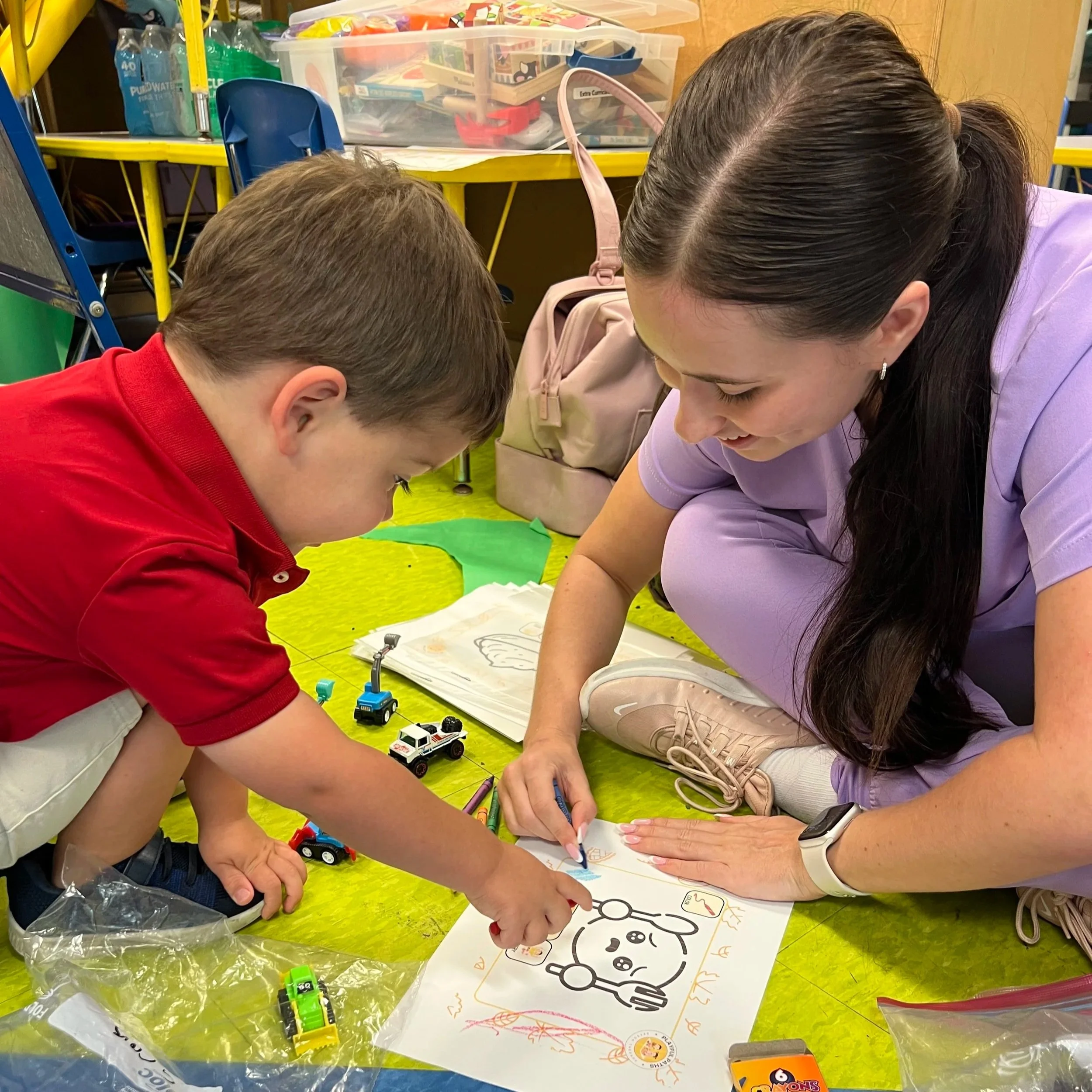
Articulation vs. Phonology: What’s the Difference?
An articulation disorder generally means that a child has difficulty correctly producing a particular sound or a small number of sounds. For example, a child might say “wabbit” instead of “rabbit”, have difficulty producing the “th” sound, or produce a distorted /s/ sound. Think of articulation as a difficulty with making a specific speech sound correctly.
A phonological disorder, on the other hand, involves patterns in the way a child uses sounds. Instead of having difficulty with only one sound, the child may change or leave out whole groups of sounds. For example, your child might say: “tat” for “cat” or “do” for “go”. This is a pattern called fronting, where sounds normally made toward the back of the mouth are replaced by sounds made toward the front. Or your child might say: “ca” for “cat” or “do” for “dog”. Here the child is leaving off the last sound of words, which is a pattern called final consonant deletion.
Some of these patterns are completely normal when children are very young. The concern comes when they continue past the age when we would typically expect them to disappear or when a child is using several patterns that make their speech difficult to understand (ASHA, n.d.). An easy way to remember the difference is:
Articulation = difficulty saying a particular sound.
Phonology = patterns in how a child uses sounds within words.
Some children can also have features of both, so it isn't always an either/or situation.
Why Can Phonological Difficulties Make Speech So Hard to Understand?
Imagine a child who has trouble producing only the /r/ sound. They might say: “The wabbit is wunning.” You probably figured out quickly that they meant, “The rabbit is running.” Now imagine that a child is leaving off ending sounds, replacing sounds made in the back of their mouth, and simplifying other parts of words all at the same time. Suddenly, figuring out what they are saying becomes much harder, especially if you don't know what they are talking about.
This is one reason children with multiple phonological patterns can sometimes be much more difficult for unfamiliar listeners to understand. As a parent, you may fill in the gaps without even noticing you're doing it. Someone who doesn't know your child doesn't have that same experience to rely on.
Does It Matter If Other People Can't Understand My Child?
It can.
Being understood isn't just about saying sounds “correctly.” Communication is how children ask for what they need, tell stories, make friends, participate in the classroom, and share their ideas.
When a child frequently has to repeat themselves or needs a parent to interpret what they're saying, communication can become frustrating. Research also tells us that speech sound difficulties can sometimes have effects beyond speech itself. Farquharson (2019) discussed how even children with a persistent error involving a single speech sound may experience challenges related to areas such as phonological awareness, literacy, and social-emotional well-being.
That doesn't mean that every child who says a sound incorrectly will have reading, academic, or social difficulties. It does mean that we should look at how a child's speech is affecting their everyday life, rather than focusing only on whether they can pronounce a particular sound.

Download our age appropriate check lists to give you a better idea about whether or not to reach out.
So, When Should I Talk to an SLP?
If you regularly notice yourself translating for your child, or if teachers, relatives, peers, and other people frequently have difficulty understanding them, it may be worth talking with a speech-language pathologist. An SLP can look at much more than whether your child can say certain sounds. We can look at the types of errors your child makes, whether there are patterns to those errors, how understandable they are to other people, and whether those difficulties are appropriate for their age. Remember, just because you understand your child doesn't necessarily mean everyone else does. You've spent countless hours listening to your child. You know their routines, favorite things, gestures, expressions, and all the little ways they communicate. Over time, you've become an expert at understanding them.
So, when someone looks at you and asks, “What did they say?” while you understood every word, there's a simple explanation: You've had a lot more practice listening!
References
American Speech-Language-Hearing Association. (n.d.). Speech sound disorders: Articulation and phonology. https://www.asha.org/practice-portal/clinical-topics/articulation-and-phonology
Farquharson, K. (2019). It might not be “just artic”: The case for the single sound error. Perspectives of the ASHA Special Interest Groups, 4(1), 76–84. https://doi.org/10.1044/2018_PERS-SIG1-2018-0019