
To schedule a free phone consult please follow the link here

What does speech therapy for toddlers look like?
If you’re considering speech therapy for your child, you may be wondering what it actually looks like. In this post, we’ll walk through what to expect from speech therapy for toddlers, how sessions work, and how a play-based, in-home approach supports real-life communication.
Starting speech therapy can feel like a big step for families. Many parents are unsure what sessions will look like, how their child will respond, and whether therapy will feel stressful or overwhelming. The good news is that for toddlers, speech therapy is designed to feel natural, engaging, and supportive—not clinical or intimidating.
Speech Therapy Is Play-Based and Child-Led
For young children, speech therapy does not look like sitting at a table doing drills. Instead, it is built around play and everyday interactions. A speech-language pathologist follows your child’s interests and uses their favorite toys and activities to create opportunities for communication. Whether your child enjoys cars, books, pretend play, or sensory activities, those interests become the foundation for learning.
This approach helps children feel comfortable and engaged, which leads to more meaningful communication attempts. When therapy feels like play, children are more likely to participate, try new skills, and build confidence.
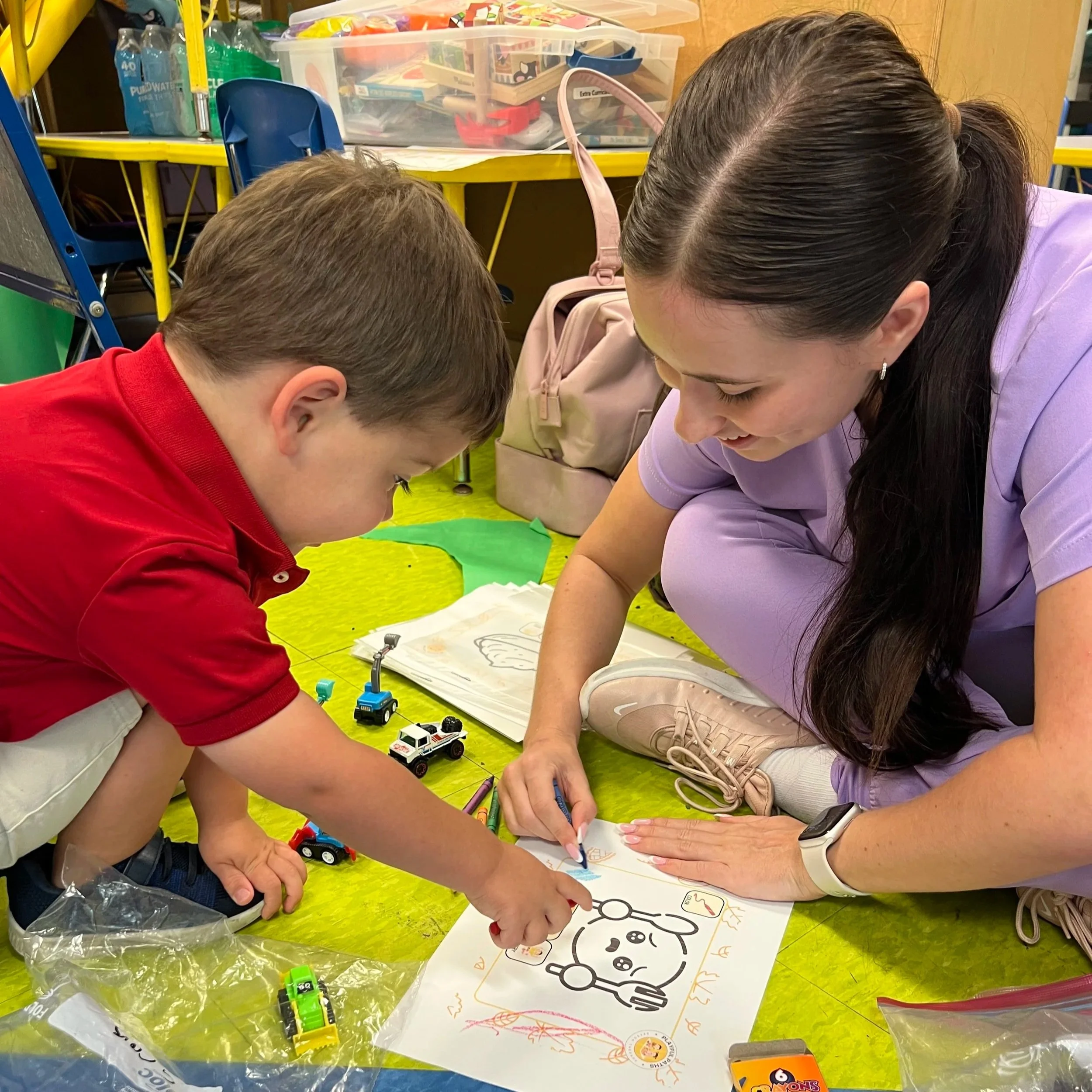
Sessions Focus on Real-Life Communication
Rather than practicing isolated words, therapy focuses on helping your child communicate in ways that matter in daily life. This might include requesting items, making choices, asking for help, or interacting with others during play.
In a home-based setting, therapy can be naturally embedded into routines your child already experiences, such as snack time, playtime, or transitions between activities. This makes it easier for children to generalize skills beyond sessions and use them throughout their day.
Parents Are an Important Part of the Process
One of the most valuable parts of speech therapy is parent involvement. During sessions, you are not expected to step away—you are encouraged to observe, participate, and learn strategies that you can use throughout the week.
A speech-language pathologist will model techniques, explain what they are doing, and guide you in supporting your child’s communication. This helps ensure that progress continues outside of therapy sessions and becomes part of your everyday interactions.
Therapy Is Individualized for Each Child
Every child’s communication needs are different, and therapy is tailored to meet your child where they are. Goals are based on your child’s current skills, strengths, and areas of need. Some children may focus on building early words, while others may work on combining words, improving clarity, or using alternative communication methods.
The pace of therapy also varies. Some children make rapid progress, while others benefit from a slower, more gradual approach. The focus is always on meaningful, functional communication rather than rushing through milestones.
Sessions Are Designed to Be Supportive, Not Stressful
A common concern parents have is whether therapy will feel frustrating for their child. In reality, sessions are structured to reduce pressure and support success. Children are not forced to speak or perform. Instead, therapists create opportunities and gently encourage communication in a way that feels safe and achievable.
This supportive environment helps reduce frustration and builds confidence over time. As children begin to experience success, their willingness to communicate often increases.
What Progress Looks Like Over Time
Progress in speech therapy is not always immediate, and it often happens in small, meaningful steps. You may notice your child becoming more engaged, using more gestures, attempting sounds, or showing increased interest in interacting with others.
These early changes are important building blocks for spoken language. Over time, they can lead to more consistent communication and clearer speech. Regular sessions, combined with support at home, help reinforce these skills and create steady progress.

Download our age appropriate check lists to give you a better idea about whether or not to reach out.
Why In-Home Therapy Can Make a Difference
For many families, in-home speech therapy offers additional benefits. Children are more comfortable in their own environment, which can lead to better engagement and participation. Therapists can also work directly within your child’s daily routines and use familiar toys and materials.
This approach allows therapy to feel more natural and helps families see how strategies can be applied in real life. It also reduces the stress of traveling to appointments, making it easier to stay consistent with services.
Taking the First Step
If you are considering speech therapy for your toddler, it is normal to have questions and uncertainties. Understanding what therapy looks like can make the process feel more approachable and less overwhelming.
Early support can help your child build communication skills in a way that feels natural and empowering. If you are unsure whether therapy is the right step, starting with a conversation can provide clarity and direction.
Free Consultation for Tampa Bay Families
For families in the Tampa Bay area, Playful Paths offers a free consultation to talk through your concerns and help you understand what speech therapy might look like for your child. This is a no-pressure opportunity to ask questions and explore next steps.
References:
American Speech-Language-Hearing Association (ASHA). Speech Therapy for Children. https://www.asha.org/public/
Centers for Disease Control and Prevention (CDC). Developmental Milestones. https://www.cdc.gov/ncbddd/actearly/milestones/index.html
American Academy of Pediatrics (AAP). Language Delays in Toddlers.
https://www.healthychildren.org
National Institute on Deafness and Other Communication Disorders (NIDCD). Speech and Language Development. https://www.nidcd.nih.gov/health/speech-and-language