
To schedule a free phone consult please follow the link here

My Child’s Teacher Mentioned a Speech Concern—What Should I Do Next?
Author: Isabella Knight M.S. CCC-SLP (Check Out Her Staff Page Here)
1. Start by Gathering More Information
Ask the teacher for examples and what they are noticing.
Are the concerns happening at certain times, with certain people, or in certain situations?
Is your child difficult to understand?
Are they struggling to find words, follow directions, answer questions, or interact with peers?
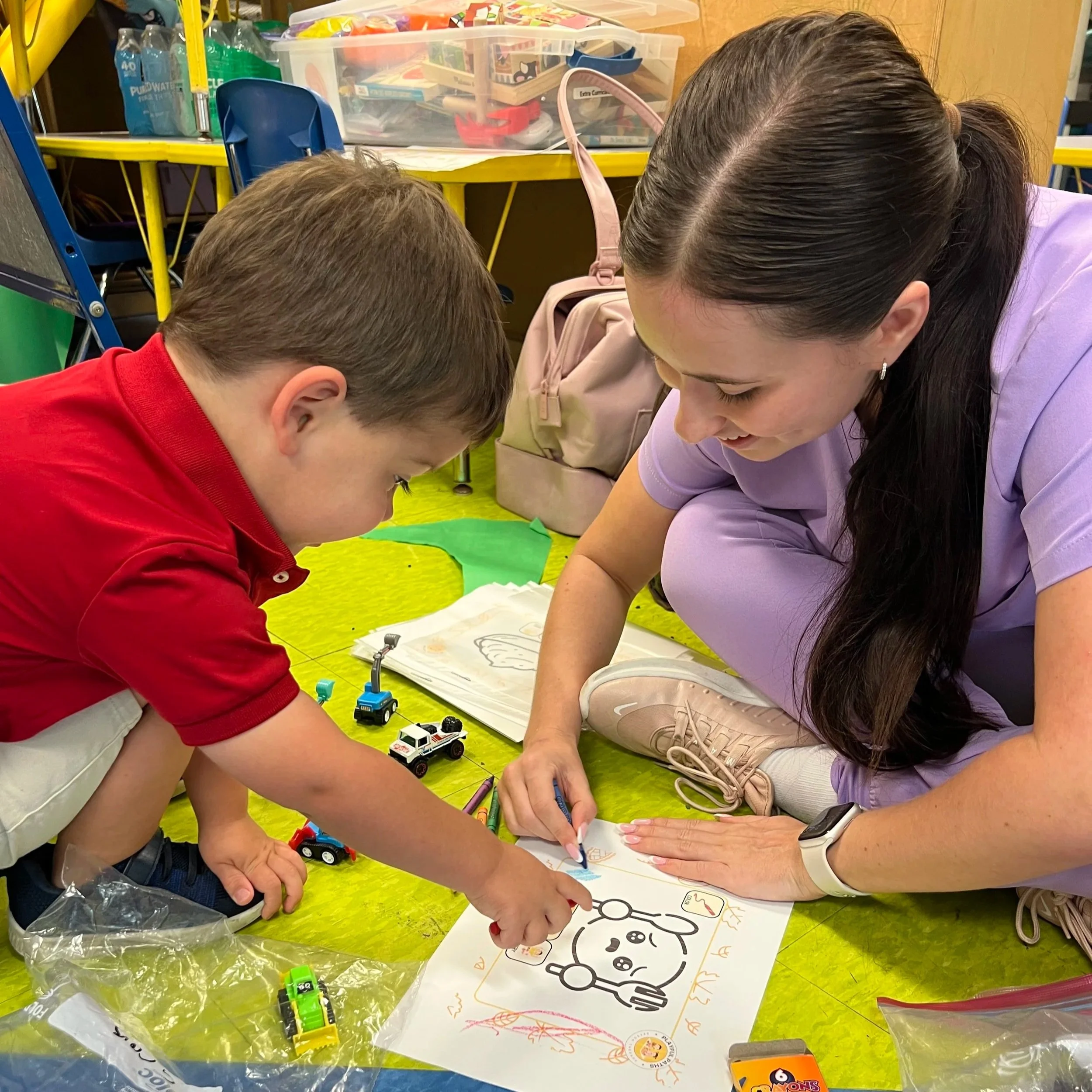
Think about how your child communicates with you, siblings, and other people in their life.
Sometimes communication difficulties are more noticeable at school because children are expected to communicate with more people and manage more complex language.
2. Consider What You’re Seeing at Home
A teacher mentioning a concern does not automatically mean your child has a speech or language disorder.
However, it can be a good reason to speak with a speech-language pathologist (SLP), especially if you or others have noticed similar difficulties.
Go get a consultation or an evaluation with an SLP to rule out and/or address concerns.
3. Don’t Feel Like You Have to “Wait and See”
Parents can ask the school about its process for speech-language screening or evaluation.
Families can also pursue a private speech-language evaluation without waiting for the school process.
4. Know Your Options for an Evaluation


Download our age appropriate check lists to give you a better idea about whether or not to reach out.
An SLP may use formal assessment activities along with conversation, toys, games, and your child’s interests to see how they communicate naturally.
An evaluation looks more closely at areas such as speech sound production, understanding and using language, fluency, voice, and social communication depending on the concern. It is a comprehensive assessment that can compare your child to same-age peers, while also taking into account individual needs and strengths.
Teacher information can provide helpful information about your child’s skills, in addition to testing.
5. What Happens During a Speech Evaluation?
Results of the speech evaluation can inform our next steps! Everyone can work together. We can monitor progress or if the testing reveals your child could benefit from therapy, then we can make goals and a treatment plan to address their delays.
The goal isn’t to immediately put a label on your child, it’s to better understand what they’re having difficulty with and whether additional support would help.
6. Next Steps
If your child’s teacher has recently mentioned a speech or language concern and you’re unsure what to do next, reaching out to an SLP for a consultation can be a great place to start.