
To schedule a free phone consult please follow the link here

How to Prepare Your Child’s Communication Skills Before School Starts
Author: Isabella Knight M.S. CCC-SLP (Check Out Her Staff Page Here)
The weeks leading up to a new school year are filled with back-to-school shopping, last-minute summer activities, and anticipation for the year ahead. Parents are often thinking about their child’s school day and the materials they may need to be successful. While preparing these tangible items, it is also important to think about the speech and language skills that can help prepare your child for a successful school year.
School-age children use communication throughout the entire school day. They need communication skills to follow directions, explain their ideas, participate in class, solve problems, build friendships, and ask for help. Luckily, there are simple ways to practice these skills during everyday summer activities. The ideas below can help your child strengthen their communication skills and feel more prepared for the school year.
Practice Following Directions
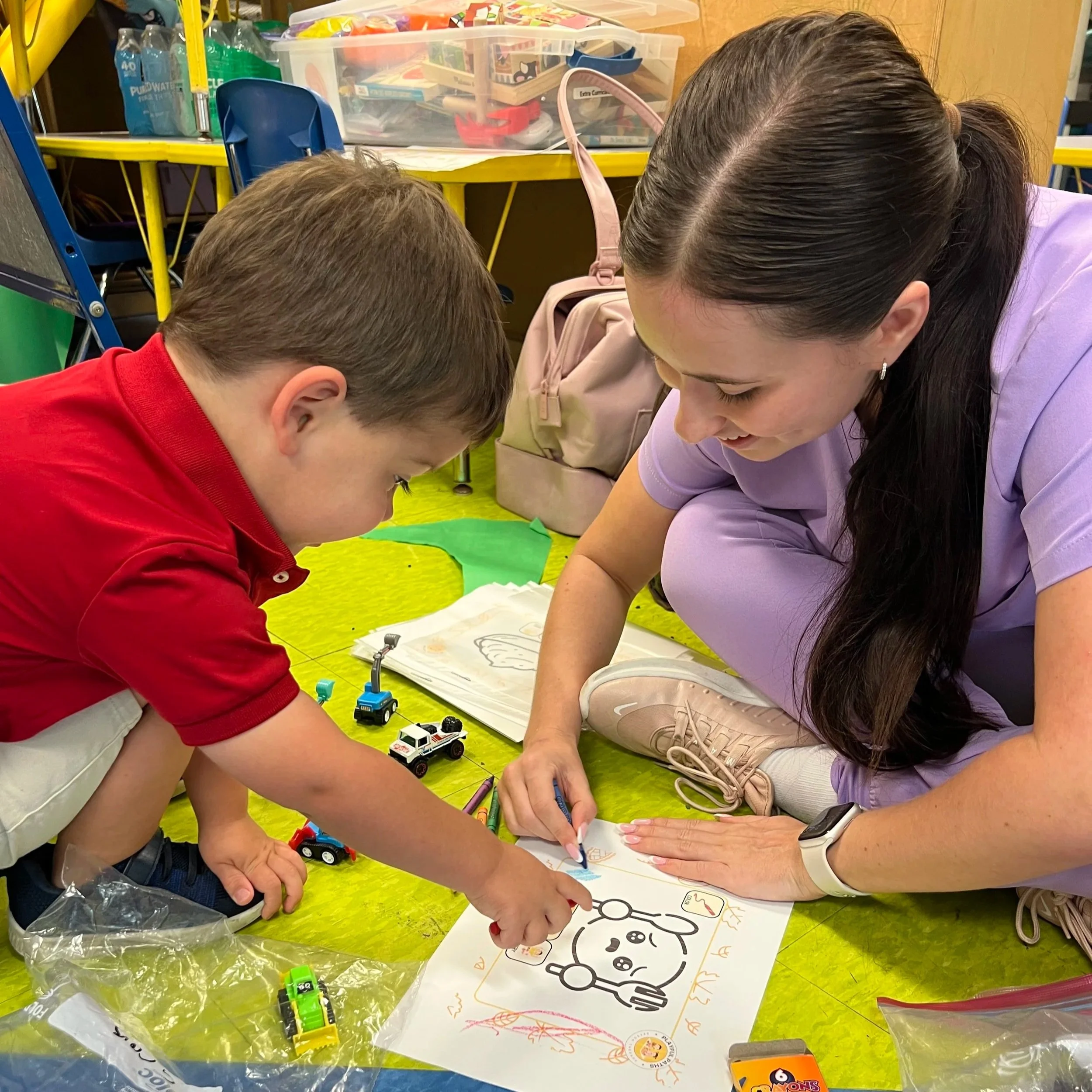
Ask your child to follow two- or three-step directions while making a snack, getting ready for summer camp, or completing a craft. For example, you may say, “Get the paper, choose three markers, and write your name at the top.”
Following directions is an important part of the school day. Children are expected to listen, remember several steps, gather their materials, and complete activities independently. Practicing this skill over the summer can help your child adjust more easily to classroom expectations.
Talk About the School Day
Talk with your child about what their school day may look like. Discuss arriving at school, finding their classroom, completing assignments, eating lunch, participating in class, and interacting with classmates.
You can also talk through what your child could do if they need help, do not understand a direction, or experience a change in their usual classroom routine. Talking about these situations ahead of time can help your child feel more comfortable and prepared when school begins.
Strengthen Vocabulary
Introduce new words during everyday summer activities. Talk about unfamiliar words while reading, cooking, visiting family, going shopping, or taking a vacation. Encourage your child to describe what the word means, use it in a sentence, or name similar and opposite words.
Vocabulary is important throughout the school year because children need to understand new words in classroom directions, stories, assignments, and conversations. Building vocabulary during the summer can help your child better understand and talk about what they are learning at school.
Encourage Your Child to Explain Their Ideas
Ask your child to describe what they created during a craft, explain the rules of a game, retell a recent activity, or share why they made a certain choice. Questions such as “How did you do that?” “What happened next?” or “Why did you choose that?” can encourage longer and more detailed responses.
Children are regularly asked to explain their answers and share their ideas at school. Practicing this skill during summer activities can help your child organize their thoughts and communicate them more clearly in the classroom.
Practice Conversation Skills
Use meals, car rides, playdates, and family activities to practice taking turns, staying on topic, asking questions, and making related comments. Encourage your child to listen to what others say and add information that helps continue the conversation.
You can also model good conversational turn-taking and active listening. These skills are important when children participate in classroom discussions, work with a partner, complete group activities, and interact with their classmates.
Practice Solving Problems
Talk through small problems that naturally occur during summer activities, such as a toy breaking, plans changing, losing a game, or two friends wanting the same item. Encourage your child to explain the problem, think of possible solutions, and choose an appropriate response.
Problem-solving skills are used throughout the school day. Children may need to work through a challenging assignment, manage an unexpected change, solve a disagreement, or decide what to do when something does not go as planned.
Build Friendship Skills
During playdates, trips to the park, summer camps, or community activities, practice greeting others, asking to join a game, sharing materials, taking turns, and asking other children questions.
These skills can help your child feel more confident when meeting new classmates, joining group activities, and building friendships during the school year.
Build Self-Advocacy Skills
Teach your child phrases they can use when they need help, such as:
“Can you help me?”
“Can you show me how?”
“Can you say that again?”
“I do not understand.”
“Can you give me an example?”
Practice using these phrases during crafts, games, outings, and other daily activities. Using them during familiar summer activities can make it easier for your child to advocate for themselves independently at school.


Download our age appropriate check lists to give you a better idea about whether or not to reach out.
Reestablish School Routines
Begin practicing school-year routines before the first day. Encourage your child to wake up on time, get dressed, eat breakfast, pack their bag, and complete tasks in the correct order.
Visual schedules or written checklists may also be helpful. Practicing these routines ahead of time can help your child manage transitions, stay organized, and feel less overwhelmed when the school year begins.
Read Together Regularly
Read books, articles, recipes, instructions, or other materials related to your child’s interests. Ask questions about the characters, main idea, important details, problem, solution, and unfamiliar vocabulary.
Reading supports many skills used throughout the school day, including comprehension, vocabulary, memory, critical thinking, and the ability to discuss information. Regular summer reading can help keep these skills active before academic demands increase. Visual schedules or written checklists may also be helpful. Practicing these routines ahead of time can help your child manage transitions, stay organized, and feel less overwhelmed when the school year begins.
Keep Practice Positive
Keep practice short, encouraging, and connected to activities your child already enjoys. Focus on your child’s effort and successful communication rather than correcting every mistake.
Even a few minutes of practice each day can help your child feel more confident and prepared to communicate throughout the school year.
If you have concerns about your child’s speech, language, social communication, or ability to keep up with classroom expectations, reach out to Playful Paths Speech Therapy to schedule a consultation. Our speech-language pathologists can help identify your child’s communication needs and provide individualized support for the school year ahead.