
To schedule a free phone consult please follow the link here

10 Everyday Summer Activities That Build Your Child's Speech and Language Skills
Author: Isabella Knight M.S. CCC-SLP (Check Out Her Staff Page Here)
Summer is the perfect time for families to rest, relax, and recover from the busyness of the school year. It is also a great time to work on speech and language skills. Luckily, opportunities to practice are plentiful and can be easily incorporated at home, into daily routines, or during outings that naturally occur throughout the summer. Here are 10 everyday summer activities that can help build your child’s speech and language skills; specifically, language targets (building up vocabulary), executive function targets (following directions, self-monitoring, etc.), speech targets (producing sounds accurately), and social skills targets (i.e., taking turns, making conversation, etc.).
Make a Summer Snack
Making a simple summer snack is a great way to work on speech and language skills while completing an everyday activity together. Let your child help gather the ingredients, follow the steps, and describe the finished snack.
Vocabulary-building targets: Salty, sweet, cold, hot, warm, apples, bananas, peanut butter.
Executive-function targets: Following directions, sequencing steps, gathering materials, staying on task, and checking completed work.
Language targets: Requesting items, answering questions, describing, comparing, and retelling the steps in order.
Articulation example targets: Practice words containing your child’s target sound, such as snack, slice, spoon, spread, or stir.
Social-language targets: Taking turns, asking for help, making choices, and using polite requests.
Visit the Library
A trip to the library provides many natural opportunities to build vocabulary, comprehension, and communication skills. Let your child choose a book, talk about the cover, and make predictions before reading.
Vocabulary-building targets: Book-related words, character names, setting words, emotions, and unfamiliar words found in the story.
Executive-function targets: Making a choice, remembering library rules, locating a book, planning how many books to borrow, and returning materials.
Language targets: Answering comprehension questions, predicting, identifying the main idea, retelling events, and describing characters.
Articulation example targets: Look for pictures or words containing your child’s speech sound and practice saying them together.
Social-language targets: Speaking quietly, asking the librarian a question, waiting patiently, and appropriately gaining someone’s attention.
Take a Car Ride
Car rides are an easy time to casually practice speech and language skills. Talk about what you see in nature or on billboards, play “I Spy,” name items within categories, or ask your child to describe where you are going.
Vocabulary-building targets: Vehicles, road signs, buildings, colors, directions, location words, and community vocabulary.
Executive-function targets: Attention, memory, planning the route, organizing information, and shifting between activities.
Language targets: Describing, categorizing, answering questions, giving directions, and telling a story about the destination.
Articulation example targets: Find objects outside that contain the target sound, such as car, road, stop, street, or store.
Social-language targets: Staying on topic, taking conversational turns, asking follow-up questions, and commenting appropriately.
Make a Summer Craft
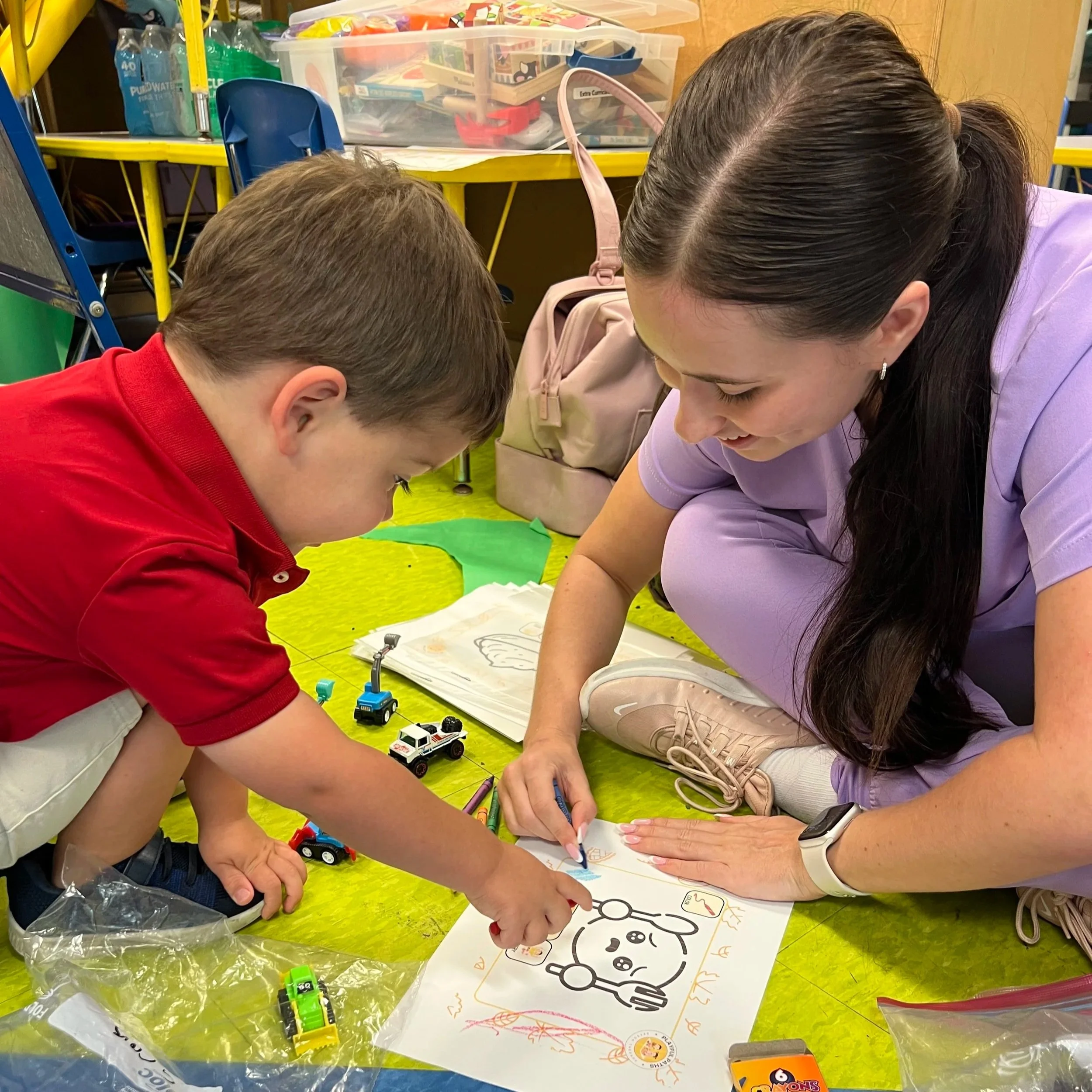
Craft activities provide a fun way to practice communication while your child creates something of their own. Talk about the materials, give directions, and encourage your child to explain what they are making.
Vocabulary-building targets: Art supplies, colors, shapes, sizes, textures, and action words such as cut, glue, fold, color, and draw.
Executive-function targets: Planning, organizing materials, following multiple steps, problem-solving, and completing a task.
Language targets: Requesting supplies, describing the craft, explaining choices, sequencing steps, and giving directions to someone else.
Articulation example targets: Practice target words such as craft, cut, color, glue, scissors, or shape.
Social-language targets: Sharing materials, asking before taking an item, requesting help, and giving positive comments.
Go to the Grocery Store
The grocery store is filled with opportunities to practice vocabulary, following directions, and problem-solving. Let your child help make the list, find items, and sort groceries into different groups.
Vocabulary-building targets: Food names, household items, categories, quantities, sizes, prices, and location words.
Executive-function targets: Following a list, remembering items, locating products, staying organized, managing time, and checking work.
Language targets: Categorizing, comparing items, answering questions, describing products, and explaining choices.
Articulation example targets: Search for foods containing the target sound, such as rice, cereal, grapes, cheese, or milk.
Social-language targets: Greeting workers, asking where an item is located, waiting in line, and using polite language.
Play in the Sprinkler
Playing in the sprinkler is a simple way to practice action words, directions, and early language skills. Use playful directions and encourage your child to describe what the water is doing.
Vocabulary-building targets: Wet, dry, splash, spray, cold, fast, slow, over, under, beside, and around.
Executive-function targets: Following directions, controlling impulses, switching between actions, waiting, and remembering safety rules.
Language targets: Following one or multi-step directions, describing actions, requesting another turn, and answering “where” questions.
Articulation example targets: Practice words such as spray, splash, sprinkler, wet, water, and run.
Social-language targets: Taking turns, inviting someone to play, responding to directions, and communicating when finished.
Go to the Park
The park naturally encourages movement, interaction, and conversation. Talk about what your child sees and does, give playful directions, and encourage them to interact with others.
Vocabulary-building targets: Playground equipment, action words, position words, nature vocabulary, and describing words.
Executive-function targets: Planning what to do first, following safety rules, waiting, transitioning between activities, and managing emotions.
Language targets: Requesting activities, describing actions, following directions, answering questions, and retelling what happened.
Articulation example targets: Practice words such as park, slide, swing, steps, climb, and grass.
Social-language targets: Asking to join a game, taking turns, greeting other children, maintaining personal space, and handling disagreements.
Visit the Farmer’s Market
A farmer’s market gives children the chance to explore new foods, smells, colors, and textures. Encourage your child to ask questions, describe what they see, and help select an item to try.
Vocabulary-building targets: Fruits, vegetables, baked goods, plants, colors, textures, smells, tastes, and quantity words.
Executive-function targets: Making choices, comparing options, following a budget, remembering items, and planning a purchase.
Language targets: Describing, comparing, asking questions, expressing opinions, and explaining why they chose an item.
Articulation example targets: Practice words such as fruit, corn, peach, strawberry, fresh, or market.
Social-language targets: Greeting vendors, asking about products, responding to questions, using polite language, and saying thank you.

Download our age appropriate check lists to give you a better idea about whether or not to reach out.
Visit a Pet Store
A pet store is an engaging place to practice vocabulary, describing, comparing, and asking questions. Talk about the different animals, what they need, and how they are alike or different.
Vocabulary-building targets: Animal names, body parts, habitats, food, movement words, and describing words such as furry, scaly, small, and noisy.
Executive-function targets: Staying with an adult, following store rules, remembering information, comparing animals, and making choices.
Language targets: Describing animals, comparing and contrasting, asking and answering questions, categorizing, and making predictions.
Articulation example targets: Practice words such as pet, fish, snake, rabbit, bird, or store.
Social-language targets: Asking an employee a question, using an appropriate voice level, waiting, and respecting personal space.
Wash the Car
Washing the car is a hands-on activity that allows children to follow a sequence, learn action words, and work together with an adult. Talk through each step and let your child help with age-appropriate tasks.
Vocabulary-building targets: Soap, sponge, hose, bucket, tire, window, clean, dirty, scrub, rinse, and dry.
Executive-function targets: Gathering supplies, following the correct order, staying focused, completing a task, and cleaning up afterward.
Language targets: Sequencing, following directions, requesting supplies, describing actions, and explaining what needs to happen next.
Articulation example targets: Practice words such as soap, sponge, scrub, spray, rinse, and car.
Social-language targets: Working together, asking for help, sharing materials, taking turns, and giving clear directions.