
To schedule a free phone consult please follow the link here

Are Kids Different These Days? A Speech Therapist’s Perspective
Author: Isabella Knight M.S. CCC-SLP (Check Out Her Staff Page Here)
Kids aren’t necessarily “different” than previous generations, but the environments they are growing up in are, and those environments shape how communication, attention, and problem-solving develop.
As a pediatric SLP, I work with families to identify strengths and areas of concern in a child’s communication skills. Many parents request an evaluation to get an idea of how their child communicates and connects with others. During evaluations, our goal is to get a comprehensive picture of the child. While they are just a “snapshot” in time, family feedback and observations play a critical role in building a clear understanding of the child.
One major theme I hear from parents is that their child grew up “different” than they did. Families reflect on playing outside in the dirt, sitting down for dinner together, and not having a digital world at their fingertips. What is sometimes less obvious is how a child’s environment can impact language development, problem-solving abilities, and overall regulation. Over time, these differences can affect academic and social success.
Parents today are balancing a lot, and many of these suggestions can feel easier said than done. Still, supporting regulation and language development often starts with recognizing what is within our control. Even small, intentional changes can help children build skills.
What Has Changed?
Screens are everywhere. And while they are tools, they can also be distractions. Heffler and colleagues (2024) found that increased screen time before age 2 is associated with a higher likelihood of atypical sensory processing patterns, including sensory seeking, sensory sensitivity, sensation avoiding, and low registration (a slower response to sensory input). Children may become more overwhelmed by sensory input, withdrawn in groups, or less aware of their surroundings.
Similarly, Fitzpatrick and colleagues (2025) found that higher levels of screen use in early childhood are associated with lower executive functioning skills, including attention regulation and cognitive control, by the time children reach school age. This means children may struggle with starting tasks, staying focused, adapting their thinking, or following rules.
In a world of TikTok, YouTube Shorts, and Instagram Reels, children are consuming the same fast-paced, short-form content as adults. These quick bursts of stimulation can make it harder for the brain to practice sustaining attention, regulating input, and engaging in deeper processing.
At the same time, children may be missing everyday experiences that naturally support development like watching a parent cook, listening to families having conversations together, or simply observing the world around them. Instead, many children spend their time engaged on screens. These missed moments are filled with rich, meaningful opportunities that support development as a whole.
What Helps Kids Develop?
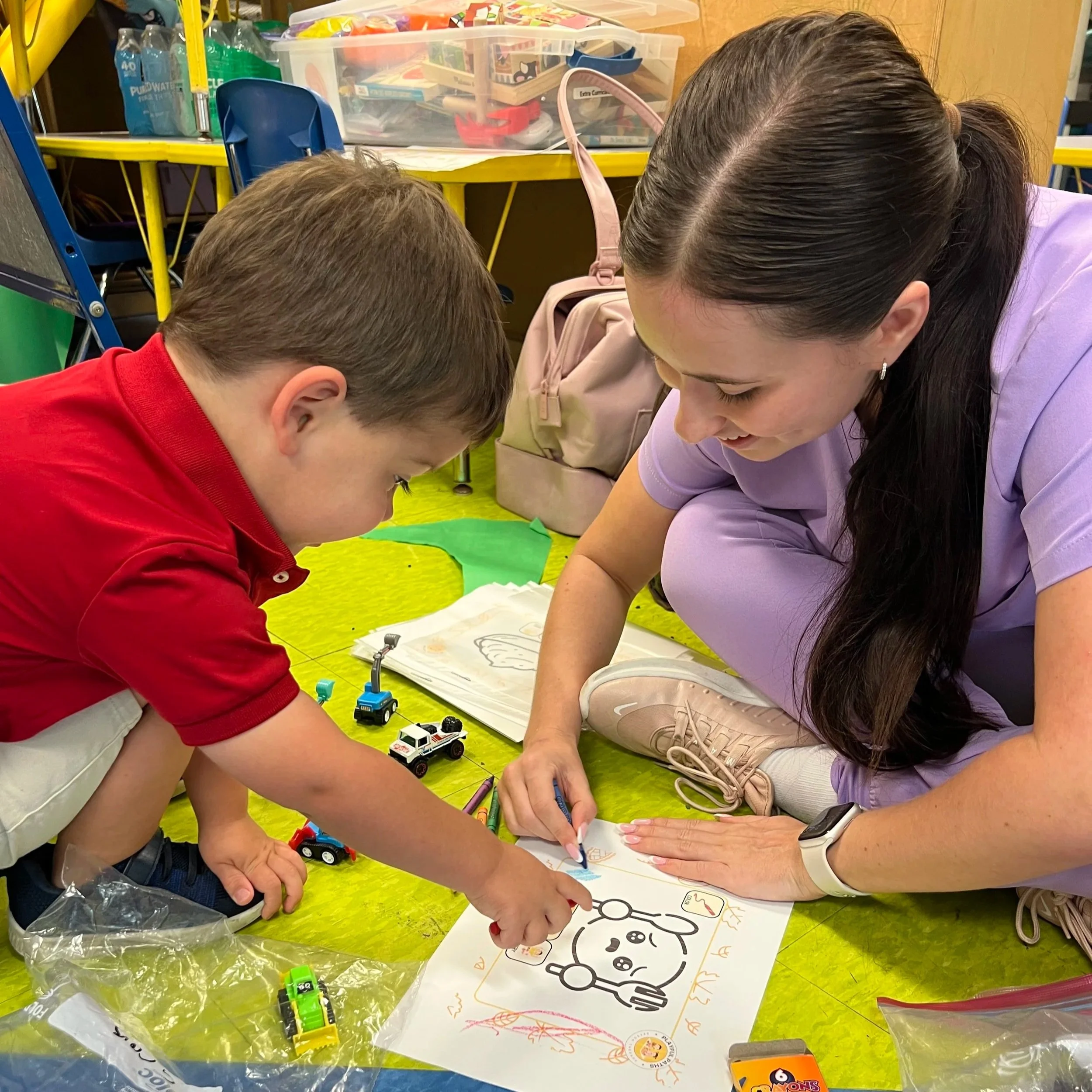
According to Ginsburg (2007), play is the foundation of early learning and childhood development. Playing builds skills in sensory processing, executive functioning, motor skills, and language development. Kids use their imagination to practice problem-solving and engage in meaningful interactions with others.
Skills developed through play form the foundation for functioning in school and everyday life. They help children understand stories, follow academic concepts, adapt when tasks change, and participate in group learning. Children also learn how to ask for help, problem-solve, and build independence through interactions with others.
Equally important are everyday moments of connection: family meals, conversations in the car, nightly bedtime stories, or just shared routines. These interactions expose children to language in a natural, meaningful way and help them learn how to communicate in real life. Selman and Dilworth-Bart (2024) note that predictable and organized home environments contribute to higher cognitive scores, more emotional and behavioral regulations, higher self-esteem, higher vocabulary, and improved mental health.
While it may not always be realistic to have long stretches of uninterrupted time, small, consistent moments of play and connection can have a significant impact.


Download our age appropriate check lists to give you a better idea about whether or not to reach out.
How Can We Build These Skills?
As a speech therapist, it might seem like my job is to constantly provide language input. Early in my career, I often felt the need to fill silence and quickly support a child when they needed help. Over time, I learned that some of the most meaningful progress happens in the pause.
Giving a child time to think, process, and attempt communication, even if it feels uncomfortable, can be powerful.
For example, during a session, I might present three toys: a toy car, bubbles, and a wind-up animal. The child reaches for the bubbles but cannot open the lid. Instead of immediately helping, I pause and give several seconds of wait time. During that pause, the child may attempt to open the container independently or say, “help,” while holding up the bubbles. I then respond, “I like how you said ‘help.’ I’ll help you!”. This moment allows the child to initiate communication, rather than rely on prompts. It supports expressive language development in a natural and meaningful way.
And what if the child doesn’t say “help”? That moment still becomes an opportunity for teaching. After the wait time, I might model: “Hmm, this is tricky. Do you need help?” The child can then respond verbally or nonverbally, and we build from there.
These small moments do more than build language, they support problem-solving, persistence, and resilience. Kids build confidence and independence (MD Searchlight Team, 2025).
As caregivers, it can be easy to anticipate a child’s needs before they express them. Sometimes, it feels like the quickest way to avoid frustration or a meltdown. But when we step in too quickly, we may unintentionally reduce opportunities for children to practice new skills, work through challenges, and develop independence.
Conclusion:
So, are kids different these days? Not really, but the world they are growing up in is. By creating opportunities for play, prioritizing connection, and allowing space for children to pause, think, and even struggle, we can support stronger language development and more confident, capable communicators. Even small shifts in daily routines can make a meaningful difference.
References
References Caroline Fitzpatrick, Elisa Florit, Alexandra Lemieux, Geneviève Garon-Carrier, & Lara Mason. (2025). Associations between preschooler screen time trajectories and executive function. Academic Pediatrics, 25(2), Article 102603. https://doi.org/10.1016/j.acap.2024.102603
Katherine F. Heffler, Bikash Acharya, Keshab Subedi, & Deborah S. Bennett. (2024). Early-life digital media experiences and development of atypical sensory processing. JAMA Pediatrics, 178(3), 266–273. https://doi.org/10.1001/jamapediatrics.2023.5923
Kenneth R. Ginsburg & Committee on Communications, and Committee on Psychosocial Aspects of Child and Family Health. (2007). The importance of play in promoting healthy child development and maintaining strong parent-child bonds. Pediatrics, 119(1), 182–191. https://doi.org/10.1542/peds.2006-2697
MD Searchlight Team. (2025). Why waiting helps children learn to talk. MD Searchlight S. B. Selman & J. E. Dilworth-Bart. (2024). Routines and child development: A systematic review. Journal of Family Theory & Review, 16(2), 272–328. https://doi.org/10.1111/jftr.12549