
To schedule a free phone consult please follow the link here

How Speech Therapy Should Fit into Your Homeschooling Routine
Homeschooling a child who receives speech therapy can feel like trying to follow two maps at once. One comes from your therapist, full of goals, data, and acronyms. The other comes from your everyday life, breakfast routines, sibling chaos, car rides, and moments that don’t look anything like a therapy room.
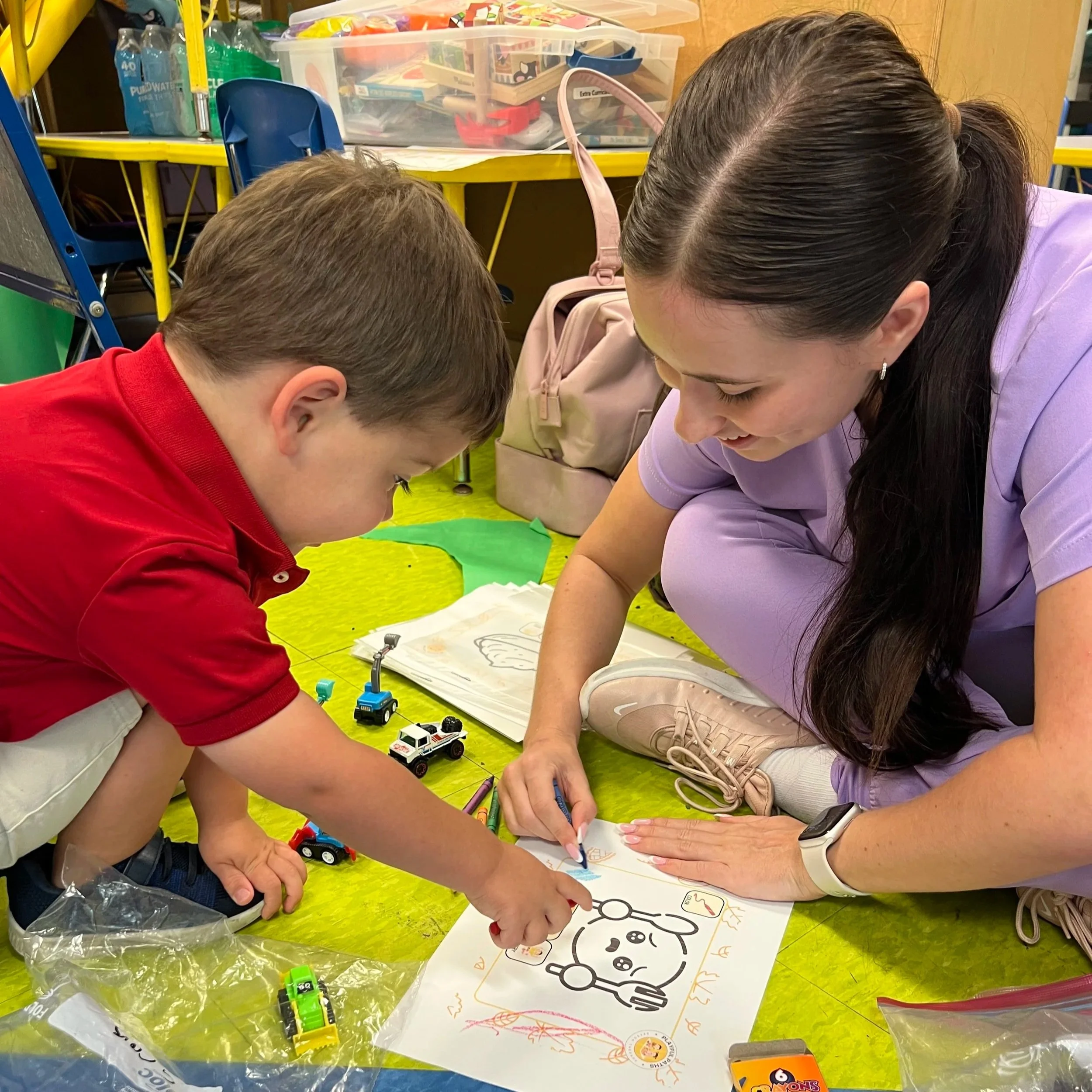
Here’s the truth many parents are never told clearly enough
Speech therapy is not something you “add on” to homeschooling.
It is something that weaves through it. When done well, speech therapy doesn’t compete with learning. It fuels it.
Communication Is the Foundation, Not the Bonus
Before we talk about schedules, SOAP notes, or funding, we need to anchor one core idea:
Communication takes precedence before academics.
Not because academics don’t matter.
But because academics depend on communication.
If a child cannot:
Ask for help
Express confusion
Answer yes/no questions
Understand directions
Share ideas or needs
Then reading worksheets and math pages become exercises in frustration, not learning.
This is especially true for autistic learners, AAC users, and children with expressive or receptive language delays. Literacy, numeracy, and writing sit on top of language. They do not replace it.
So if your homeschool day feels like it revolves around speech goals more than worksheets, that’s not a failure of rigor. That’s solid educational planning.
What Speech Therapy Looks Like Inside a Homeschool Day
Speech therapy doesn’t need a separate hour with flashcards and drills. In fact, it works best when it doesn’t.
Here’s what it can look like instead:
Practicing requesting during snack prep
Working on core words while playing with toys
Answering yes/no questions during read-alouds
Labeling actions while folding laundry
Using AAC to choose activities for the day
Expanding phrases during cooking or crafts
These moments count. They count more than isolated practice because they happen in real contexts where communication actually matters.
Your homeschool environment is not a limitation. It is an advantage.
Understanding Speech Therapy Goals and SOAP Notes
If your child receives speech therapy, you may hear your therapist reference SOAP notes. This is not just paperwork for insurance. They are roadmaps for what your child is actively working on.
SOAP stands for:
S – Subjective: What the therapist observed or what was reported
O – Objective: Measurable data from the session
A – Assessment: Progress toward goals
P – Plan: What comes next
That final piece, the plan, is where homeschooling parents have the most power.
Those goals are not meant to live only in a therapy session once or twice a week. They are meant to be practiced, reinforced, and generalized across all environments. That’s where you come in.
How Parents Can Work on Therapy Goals at Home
You do not need to “be the therapist” to support therapy goals. You need to be intentional.
Here’s how to make speech goals part of your routine without turning your home into a clinic:
1. Ask for Plain-Language Goals
If a goal sounds like:
“Increase spontaneous multi-modal communicative acts during structured tasks”
Ask your therapist to translate that into:
What should I model?
What should I respond to?
What does success look like at home?
A good therapist welcomes this question.
2. Pick One or Two Focus Areas
You don’t need to work on every goal every day.
Choose:
One expressive goal (requesting, commenting, labeling)
One receptive goal (following directions, answering questions)
That’s enough.
3. Embed Goals Into Existing Activities
Instead of creating new tasks, look at what you already do:
Meals
Playtime
Reading
Daily routines
If the goal is requesting, pause before giving items.
If the goal is answering yes/no, ask real questions with real outcomes.
If the goal is expanding language, model slightly longer phrases than your child uses.
Why Generalization Matters More Than Perfection
A child who can label pictures in a therapy room but cannot ask for help at home is not truly communicating yet.
Homeschooling offers something many clinical settings cannot: continuous opportunities for generalization.
Generalization means:
Using skills with different people
In different locations
Across different activities
Every time your child uses a communication skill outside of therapy, you are strengthening their learning in a way worksheets never could.
Funding Speech Therapy Through the Step Up for Students Unique Abilities Scholarship (FES-UA)
One of the biggest barriers families face is access. Therapy is expensive, and many families assume homeschooling means paying out of pocket.
That’s not always true.
The Step Up For Students Unique Abilities Scholarship (FES-UA) can be used to help pay for:
Speech therapy services
Occupational therapy
Educational materials
Curriculum and learning supports
For eligible Florida students, this scholarship allows families to customize education and therapy based on their child’s needs, not a one-size-fits-all school model.
This matters because it means:
Therapy can continue alongside homeschooling
Parents can choose providers who understand their child
Services can align with home-based learning goals
Speech therapy does not need to disappear when you choose to homeschool. With the right funding and planning, it can become even more effective.
Balancing Therapy, Homeschooling, and Real Life
One of the quiet pressures parents feel is the belief that they must do everything perfectly.
You don’t.
You are not expected to:
Collect data like a clinician
Run formal sessions every day
Replace professional services
Your role is different and just as important.
You are:
Providing meaningful communication opportunities
Reinforcing skills where they naturally occur
Building trust and safety for language to emerge
Progress doesn’t always look like more words. Sometimes it looks like:
Fewer meltdowns
More attempts
Better understanding
Increased confidence
Those are wins.
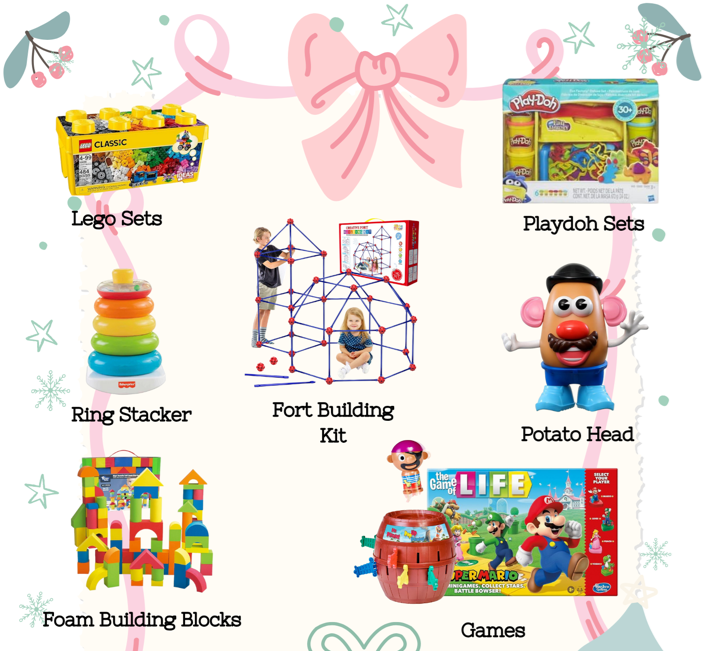
See our page of SLP reviewed and approved toys, books, and more!
When Communication Comes First, Everything Else Follows
When children can communicate:
Learning becomes accessible
Behavior becomes more understandable
Relationships deepen
Independence grows
Academics will come. Reading will come. Writing will come.
But communication is the bridge that gets them there.
Homeschooling gives you the flexibility to honor that order. Speech therapy gives you the tools. Together, they create something powerful: learning that works for your child.
You are not behind.
You are building the foundation.
References
American Speech-Language-Hearing Association. (n.d.). 10 strategies to train parents and improve carryover for students using AAC. The ASHA Leader.
https://leader.pubs.asha.org/do/10.1044/10-strategies-to-train-parents-and-improve-carryover-for-students-using-aac/full/
American Speech-Language-Hearing Association. (n.d.). Augmentative and alternative communication (AAC).
https://www.asha.org/practice-portal/professional-issues/augmentative-and-alternative-communication/
American Speech-Language-Hearing Association. (n.d.). Coaching parents to foster their child’s expressive language skills. The ASHA Leader.
https://leader.pubs.asha.org/do/10.1044/coaching-parents-to-foster-their-childs-expressive-language-skills
American Speech-Language-Hearing Association. (n.d.). Evidence-based practice in speech-language pathology.
https://www.asha.org/research/ebp/