
To schedule a free phone consult please follow the link here

Will My Child Lose Speech Progress Over Summer? What Parents Should Know
Author: Isabella Knight M.S. CCC-SLP (Check Out Her Staff Page Here)
During the school year, children may get structured practice for their speech and/ or language challenges through school routines, classroom language demands, peer interaction, and school-based speech therapy. Your child worked hard all school year to improve speech sounds, language skills, social communication, or following directions. Now summer is here, and you may be wondering: Will they lose progress?
Can Children Lose Speech Progress During Summer?
Children should not lose all of their progress over summer, but long breaks from structured practice (therapy) can lead to forgetting some learned skills. During the summer, you may note that they are becoming harder to understand, need frequent reminders, or exhibit more difficulty following directions after a break from routine. This may happen because summer often brings fewer structured communication demands. When there are fewer demands, there are fewer opportunities to practice.
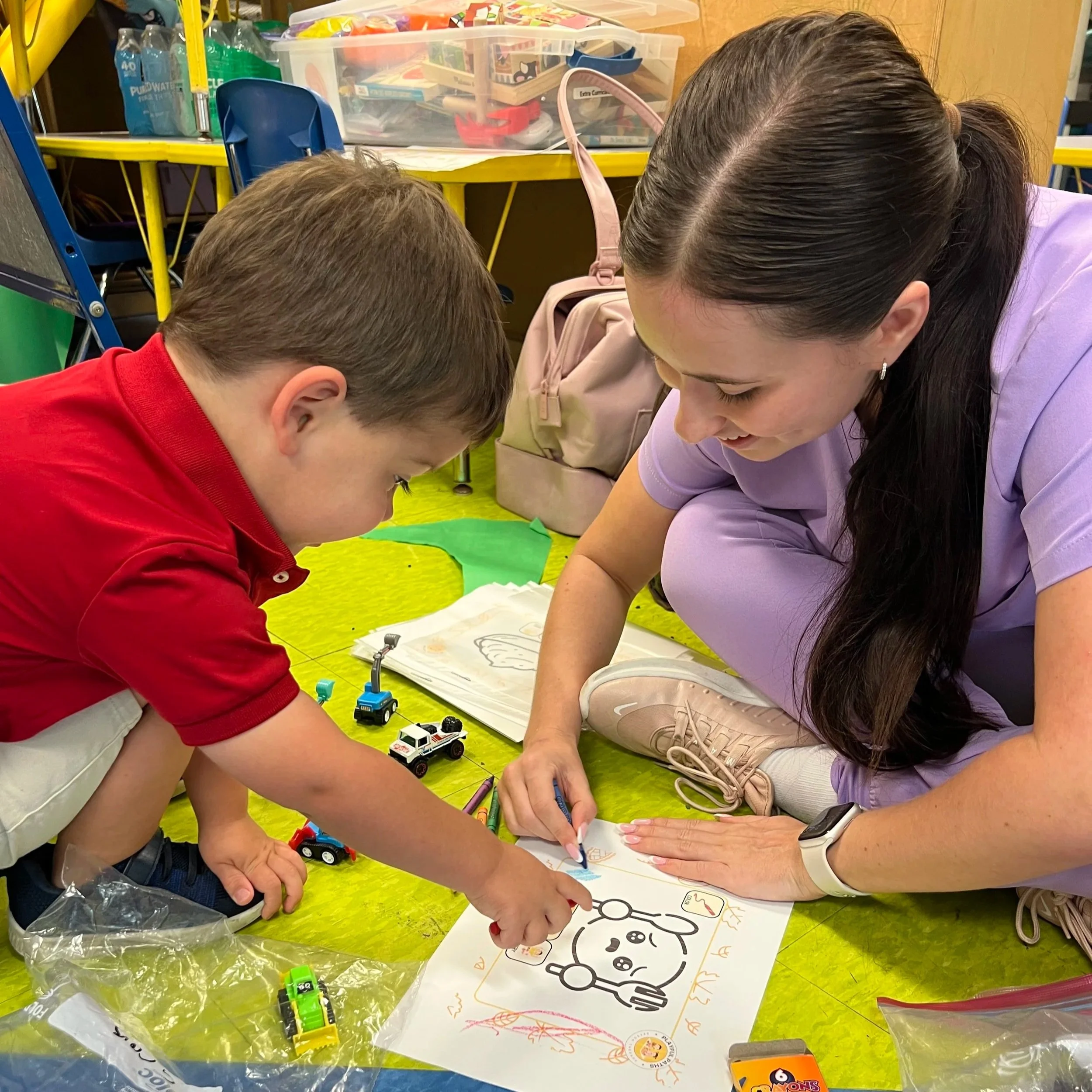
Why Consistent Speech Therapy Matters
Kids need continued practice to keep those skills active. This is where private speech therapy is important. It gives your child continued practice while also giving you simple strategies to use everyday. Private speech therapy can continue year-round and can focus on communication needs across home, community, daycare, homeschool, and daily routines. It can be especially helpful during summer because it provides consistency while school services are paused. Research supports what families see in real life: children often make the most progress when they have consistent, meaningful opportunities to practice. For example, Law et al. found that “overall there is a positive effect of speech and language therapy interventions” for children with expressive phonological and expressive vocabulary difficulties (Law et al., 2003).
The Importance of Regular Practice for Communication Skills
For children working on articulation, language, comprehension, AAC, fluency, or social communication, therapy provides repeated chances to practice skills correctly. Without consistent opportunities, skills may become less automatic. For some speech disorders, treatment intensity matters. Kaipa and Peterson found that “higher dose or higher dose frequency…resulted in better outcomes” for some children with speech sound disorders and childhood apraxia of speech (Kaipa & Peterson, 2016).
How Parents Can Support Speech and Language Development at Home
In addition to private speech therapy sessions, summer can still be full of language-building moments, but families may need to be more intentional. A study by Roberts et al. 2019 found that parent training was associated with improved language and communication outcomes. These training and recommendations come from the speech therapist that you work with. They provide family-centered recommendations and coaching based on your child’s needs and can help you find simple ways to support your child’s communication during everyday routines.
Because research supports the role of therapy, intensity, dosage, and parent involvement, children who are still actively learning communication skills may benefit from continued opportunities to practice throughout the summer (Kaipa & Peterson, 2016; Roberts et al., 2019).

Download our age appropriate check lists to give you a better idea about whether or not to reach out.
Make the Most of Summer Speech Therapy
Summer is a great time to focus on communication in a relaxed, functional way. Whether your child is working on speech sounds, language, comprehension, AAC, or social communication, consistent support from a speech therapist can help them carry their skills into everyday life. Summer speech therapy does not have to feel like school. It can be play-based, functional, and built around the routines your child is already doing.
References:
Kaipa, R., & Peterson, A. M. (2016). A systematic review of treatment intensity in speech disorders. International Journal of Speech-Language Pathology, 18(6), 507–520.
Law, J., Garrett, Z., & Nye, C. (2003). Speech and language therapy interventions for children with primary speech and language delay or disorder. Cochrane Database of Systematic Reviews, 2003(3), Article CD004110.
Roberts, M. Y., Curtis, P. R., Sone, B. J., & Hampton, L. H. (2019). Association of parent training with child language development: A systematic review and meta-analysis. JAMA Pediatrics, 173(7), 671–680.