
To schedule a free phone consult please follow the link here

My Toddler Understands Everything But Isn’t Talking—Is This Normal?
Wondering why your toddler understands everything but isn’t talking? This guide explains the difference between understanding and speaking, common causes of delayed speech, and when to consider speech therapy.
Understanding the Difference Between Comprehension and Speech
If you’ve noticed that your child follows directions well, seems to understand everything you say, but is barely talking or not talking at all, you are not alone. This is one of the most common and confusing concerns parents have. Many families find themselves wondering how a child can appear to understand so much, yet struggle to express themselves with words.
To understand this, it helps to know that communication is made up of two parts: receptive language and expressive language. Receptive language refers to what your child understands, while expressive language refers to what your child can say. Some toddlers develop strong receptive language skills first, meaning they understand words, routines, and directions, but have difficulty expressing themselves verbally. This is often referred to as an expressive language delay.
Is This Normal or a Cause for Concern?
It is not uncommon for toddlers to understand more than they can say, but it is also not something that should be dismissed. Many parents are told that their child will “talk when they’re ready,” and while that can be true in some cases, it is not always the full picture. By around 18 to 24 months, most children are using at least 20 to 50 words, attempting to imitate sounds, and trying to communicate their wants and needs, even if it is not always clear. If your child understands language well but uses very few or no words, it may be a sign that they need additional support.
Why Some Toddlers Understand More Than They Can Say
There are several reasons why a child may understand more than they can express. Some children experience motor planning challenges, meaning they know what they want to say but have difficulty coordinating their brain and mouth to produce the words. Others may not have as many opportunities to practice expressing themselves, especially if their needs are consistently anticipated by caregivers. Some children struggle with speech sound development and may avoid trying to talk because it feels difficult. Others rely more heavily on gestures, pointing, or leading adults to communicate. In some cases, differences in communication may be related to broader developmental factors, such as autism or overall language delays, although this is not always the case.
Why Some Toddlers Understand More Than They Can Say
There are simple and effective ways you can support your child’s communication at home. One of the most important strategies is to model language without adding pressure. Instead of asking your child to repeat a word, you can simply label and describe what they are experiencing, such as saying “ball” or “you want the ball” during play. Creating opportunities for communication is also helpful. This can be done by pausing during routines, such as holding a snack for a moment before giving it, pausing a favorite song, or waiting before handing over a toy. These small pauses encourage your child to attempt communication in a natural way.
Following your child’s lead is another powerful strategy. Talking about what your child is already interested in increases engagement and makes it easier for them to learn language. You can also expand on any sounds or words they attempt. For example, if your child says “ba,” you can respond with “ball” or “big ball.” This type of natural expansion helps build language without pressure.
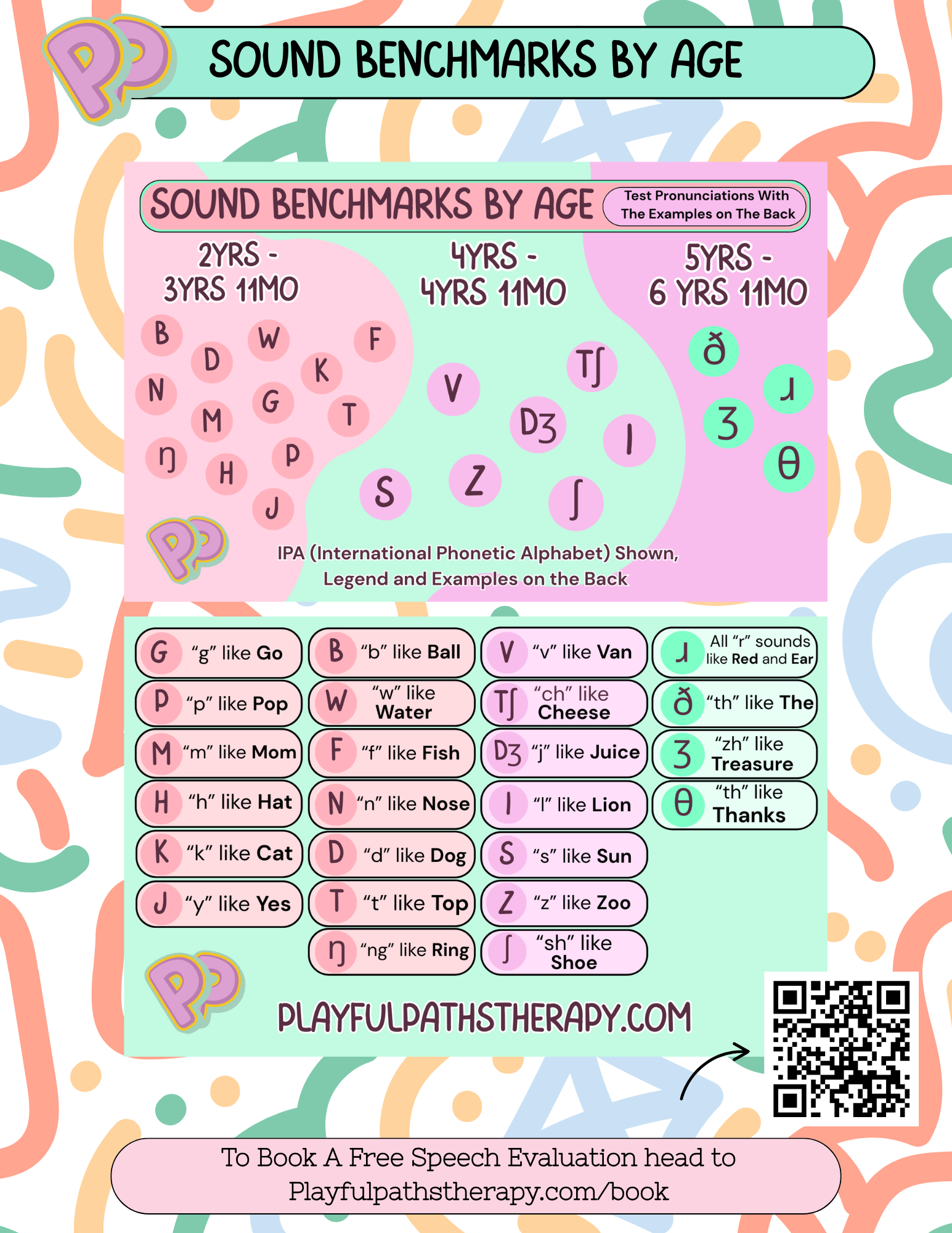
Download our age appropriate check lists to give you a better idea about whether or not to reach out.
When to Consider Speech Therapy
There are certain signs that may indicate it is time to consider speech therapy. These include not using words by 18 to 24 months, having a limited vocabulary of fewer than about 20 words, showing frustration when trying to communicate, relying mostly on gestures instead of words, if you think your child is less than 80% intelligible in their speech (meaning out of 100 in a conversation or words used, 80% of them should be understood by 36 months), or not attempting to imitate sounds or speech. Early support can make a significant difference in helping children develop communication skills.
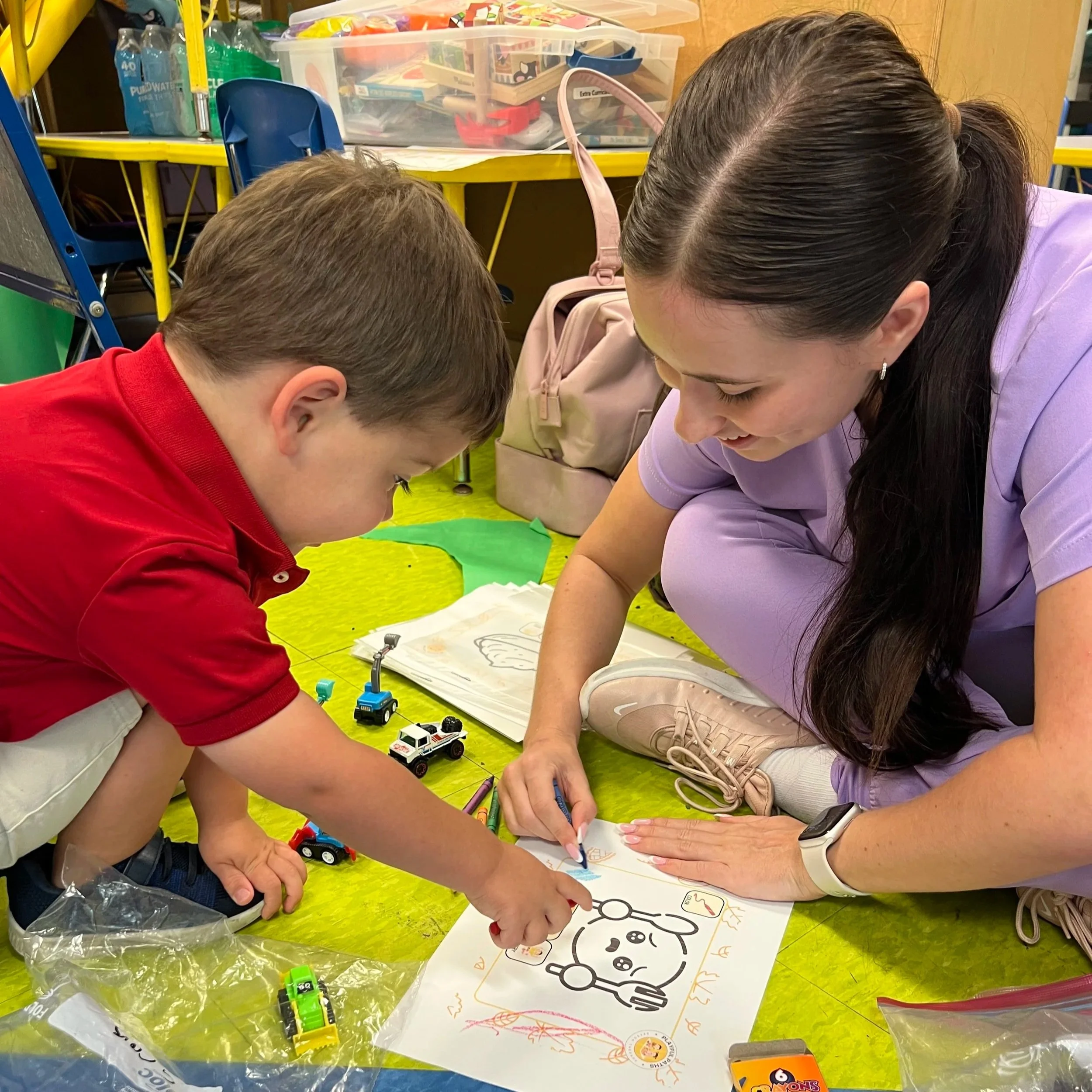
Speech therapy, especially in a home-based setting, often looks very different from what parents expect. It typically involves play-based interactions using your child’s favorite toys and activities, with communication built into everyday routines. An important part of the process is also coaching parents so they feel confident supporting their child’s communication throughout daily life, not just during therapy sessions.
Trusting Your Instincts as a Parent
If you are questioning whether your child is simply a late talker or may need extra support, it is important to trust your instincts. Gaining clarity early can make it easier to support your child’s development and reduce uncertainty.
For families in the Tampa Bay area, Playful Paths offers a free consultation to talk through your concerns and help you understand the next steps. This is a no-pressure opportunity to get guidance and determine what support, if any, may be helpful for your child.
References:
American Speech-Language-Hearing Association (ASHA). Speech and Language Development.
https://www.asha.org/public/speech/development/
Centers for Disease Control and Prevention (CDC). Developmental Milestones.
https://www.cdc.gov/ncbddd/actearly/milestones/index.html
American Academy of Pediatrics (AAP).
https://www.healthychildren.org/
National Institute on Deafness and Other Communication Disorders (NIDCD). Speech and Language Development.
https://www.nidcd.nih.gov/health/speech-and-language
Zero to Three. Early Communication Development.
https://www.zerotothree.org/