
To schedule a free phone consult please follow the link here

7 Everyday Routines for Speech & Language
Author: Isabella Knight M.S. CCC-SLP (Check Out Her Staff Page Here)
Addressing your child’s speech and language skills is not always about worksheets, special toys, or setting aside a dedicated task during their day. Sometimes, familiar routines offer opportunities to hear words, share ideas, and participate in conversations. Routines benefit your child while taking the pressure off you to constantly come up with new learning activities, turning everyday moments into natural opportunities to learn. The goal is to follow your child’s interests, talk about what’s happening, and give them a chance to respond. See the list of routines below and some ideas on how to help your child work on their skills they are learning in speech and/or language therapy.
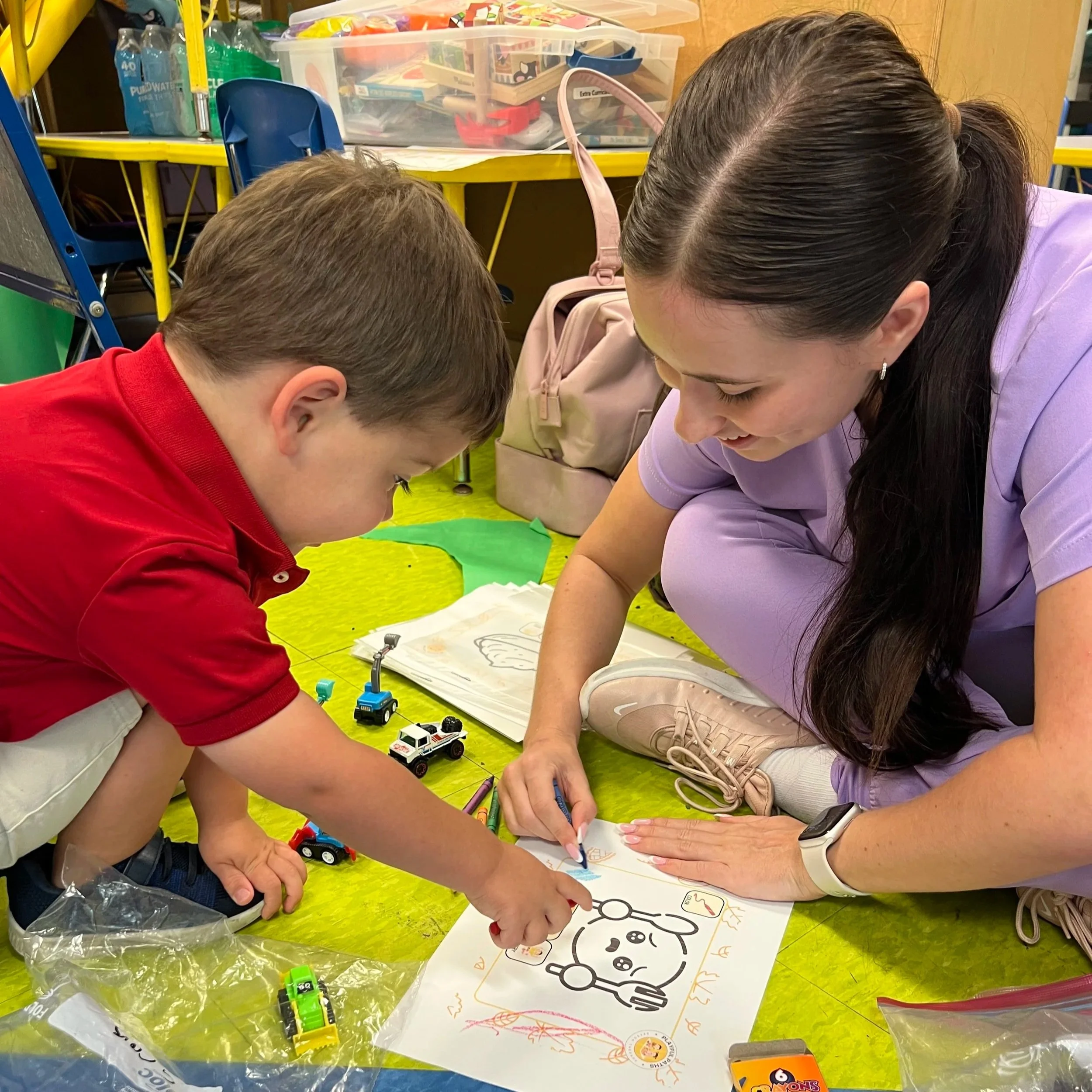
1. Getting Dressed: Talk About What Goes On
Focus: Clothing vocabulary, action words, and simple directions.
Try it: Describe what you’re doing and offer a choice between two available items.
Example: “Shirt on! Now your arms go in. Do you want blue socks or white socks?”
For older children: Talk about what to wear for the weather and why. Talk about the multiple steps to getting ready in the morning.
2. Mealtimes: Give Your Child Something to Talk About
Focus: Making choices, expressing preferences, and describing.
Try it: Talk about tastes, textures, and actions while preparing or eating food.
Example: “Your apple is crunchy! Mine is crunchy, too.” If your child says “apple,” build on it with “More apple” or “Cut the apple.”
For older children: give them a list of instructions or multiple step directions for making their own meal.
3. Bath Time: Make Action Words Come Alive
Focus: Verbs, body parts, and concepts such as in, out, wet, and dry.
Try it: Pair short phrases with actions as they happen.
Example: “Pour the water,” “Wash your toes,” or “The duck is floating!”
For older children: Talk through the steps for washing or predict which bath toys will float. Practice the /sh/ or /th/ sound found in the word “shower, shirt, bathtub, toothbrush, bathroom,” etc.
4. Playtime: Follow Their Lead and Add a Little Language
Focus: Shared attention, taking turns, practicing target sounds and combining words.
Try it: Join what your child is already doing, comment on their play, and pause for a response.
Example: Your child says, “Car!” You respond, “Fast car!” or “The car crashed!” Allow them an opportunity to practice a few target sounds in words or sentences before their turn in a game.
Parent reminder: Balance questions with comments so play feels like a shared activity.
5. Cleaning Up: Practice Words While Working Together
Focus: Categories, location words, and following directions.
Try it: Describe where items belong and give directions that match your child’s understanding.
Example: “Put the car in the box” or “Let’s find all the animals.”
For older children: Add a sequence: “First put the blocks away, then place the books on the shelf.”
6. Car Rides and Walks: Notice and Share
Focus: Vocabulary, describing, and back-and-forth conversation.
Try it: Talk about something your child notices instead of asking lots of naming questions.
Example: “That truck is huge! It’s carrying dirt. I wonder where it’s going.”
For older children: Discuss where you’re headed, what might happen there, or something that happened earlier.
7. Bedtime Books: Make Reading a Conversation
Focus: Understanding language, storytelling, and talking about feelings.
Try it: Follow your child’s interest in the pictures, comment, and give them time to join in.
Example: “The bear looks sad. His toy broke!” For older children, invite predictions or a retelling.
Parent reminder: You don’t have to read every word to share a meaningful book experience, shared reading, discussing stories, and talking about daily experiences can be just as important.

Download our age appropriate check lists to give you a better idea about whether or not to reach out.
Choose one easy moment and build from there. Many of these examples primarily support language, but children working on specific speech sounds can incorporate words recommended by their SLP.
If you are interested in learning more about routines and how they can benefit your child's communication skills, reach out to Playful Paths Speech Therapy.