
To schedule a free phone consult please follow the link here

Christmas Activities That Boost Speech
A Playful Paths Speech Therapy Guide for Parents (With Easy, Do-This-At-Home)
The holidays are full of routines you’re already doing, decorating, baking, wrapping, and driving to see lights. Each one can become a natural speech moment with just a few small tweaks. No flashcards, no pressure, no drills. Just connection, fun, and language woven into your day.
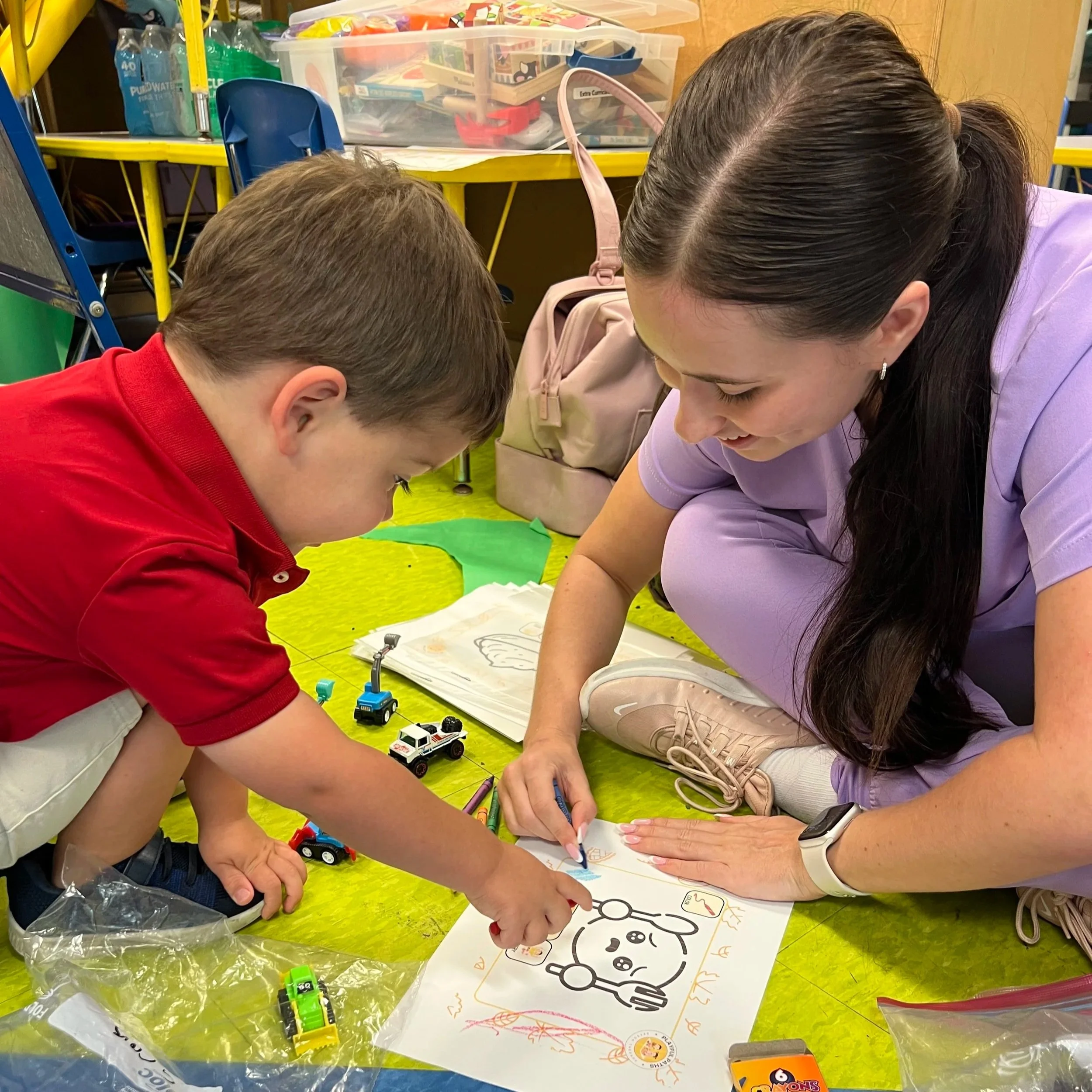
1. Baking for Speech: Christmas Cookies That Build Vocabulary & Following
Baking is one of the easiest (and yummiest!) ways to build language because it naturally uses action words, sequencing, choices, and sensory descriptions.
Try This:
Narrate your actions as you bake:
“I pour.” “You stir.” “We mix.”Offer choices instead of yes/no questions:
“Do you want sugar or flour?”Pause and wait 2–3 seconds to give your child a chance to communicate.
Model simple sequences while working together:
“First pour… next stir… last bake.”Describe textures with simple, concrete words:
“Sticky dough,” “warm pan,” “soft cookie.”
Parent Tip:
If your child doesn’t talk yet, still model the words on your AAC device or verbally.
Participation isn’t required; exposure builds learning.
2. Decorating the Tree: Holiday Language Ideas
The tree is full of color, texture, and movement, perfect for modeling core words and building early phrases.
Try This:
Label what your child touches or looks at:
“Red ball.” “Soft scarf.” “Sparkly lights.”Use simple 2–3 word models:
“Put on.” “Take off.” “Look here.”Give choices for ornaments:
“Big star or little star?”Let your child direct the decorating, where they point is communication.
Use location words while decorating:
“Up high.” “Down low.” “On the side.”
Parent Tip:
Slow down the decorating. Each pause is an invitation for your child to communicate, even if it’s just with a look or gesture.
3. Gift Wrapping & Opening: Perfect for Requesting & Turn-Taking
Both wrapping and opening gifts provide natural opportunities to practice meaningful communication.
Try This:
Keep materials separate so your child has to request:
Put wrapping paper on one side, tape on the other, ribbon behind you.Offer quick, natural prompts:
“Tape or paper?” “Help or do it?”Model commenting as you open gifts:
“I see truck.” “I like this.” “More paper!”Practice turns:
“My turn tape.” “Your turn paper.”
Parent Tip:
Go slowly during present opening. Think of it like stretching out the opportunities for your child to communicate.
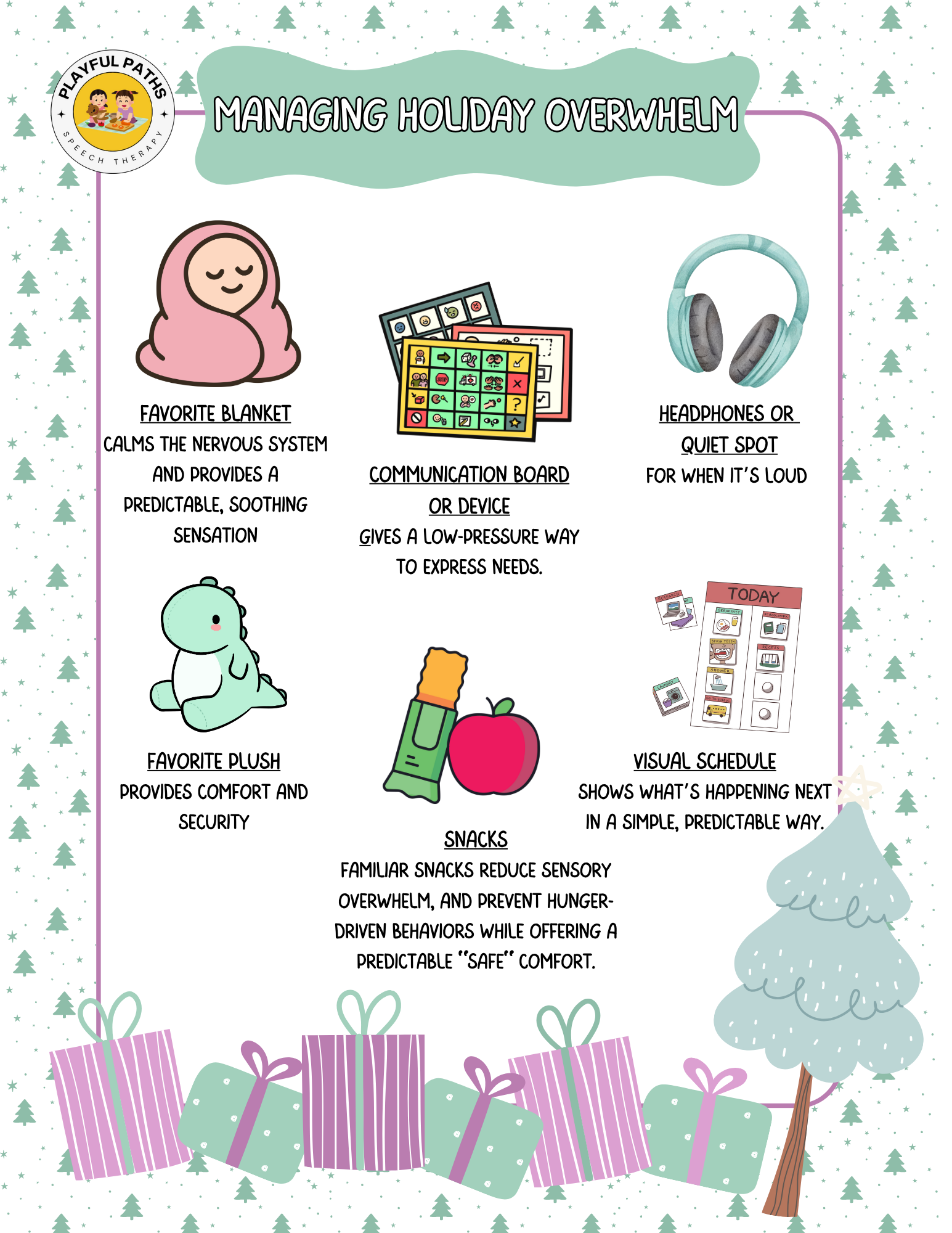
Download our Managing Holiday Overwhelm PDF!

Download our Christmas Communication Board and Coloring Book!
4. Santa Visits: Build Comfort, Choices, and Social Language
For some kids, Santa is magical. For others… not so much. No matter how your child feels, you can support communication, comfort, and consent.
Try This:
Prep your child with a simple script or social story.
(“We see Santa.” “We say hi.” “We take picture,” or “no picture.” “All done.”)Give real choices at the moment: “Stand or sit?” “Picture or no picture?” “Hi or wave?”
Model emotion words based on what you see: “You look unsure.” “You feel excited.”
Use a Santa Communication Board to point to: “hi,” “bye,” “see,” “wait,” “break,” “all done.”
Parent Tip:
If your child says “all done” or shows discomfort (turning away, hiding, stiff body), honor it immediately. That builds trust and self-advocacy.
5. Car Rides to See Christmas Lights: Great for Describing & Commenting
Car rides are calm, cozy, and full of natural language moments , especially when looking at lights.
Try This:
Use repetitive phrases that your child can predict:
“I see ___.” “Look at ___.”Point & pause, this encourages your child to comment or imitate.
Label colors and sizes:
“Big tree.” “Blue lights.” “Little house.”Use excitement naturally:
“Wow!” “So bright!” “Pretty lights!”
Parent Tip:
Turn off the music for a minute to make space for language, then turn it back on for fun. Alternating stimulation helps regulation.
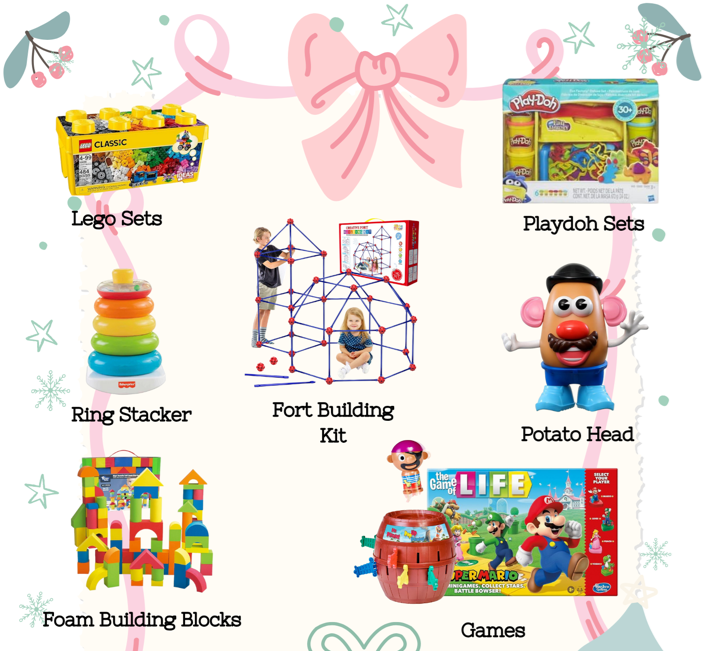
See our page of SLP reviewed and approved toys, books, and more!
Bonus: Managing Christmas Overwhelm (With Emotion Words That Support Self-
Holiday overwhelm happens easily: crowds, noise, lights, new foods, changes in routine. Supporting emotional language helps your child express what they need.
Teach Simple Emotion Words
Happy • Excited • Tired • Overwhelmed • Cozy • Scared • Ready • Not Ready
Try This:
Model emotional words without asking questions:
“You look tired.” “That was loud, overwhelming.” “You feel cozy with your blanket.”Use them in real-time moments so the vocabulary has meaning.
Provide Tools
Communication board with break and help
Simple emotion chart
Headphones or sunglasses
A quiet spot in every house you visit
Try This:
Before a family event, say:
“If you need a break, show me your card. I will help you.”During the event, remind softly:
“You can say ‘all done.’ I’ll listen.”
Honor Your Child’s Communication
If your child communicates discomfort in any form, treat it as meaningful. Backing off, offering space, and respecting boundaries builds trust and real communication skills.
References
ASHA. (n.d.). Activities to encourage speech and language development. American Speech-Language-Hearing Association. https://www.asha.org/public/speech/development/activities-to-encourage-speech-and-language-development/
ASHA. (n.d.). Augmentative and alternative communication (AAC). American Speech-Language-Hearing Association. https://www.asha.org/public/speech/disorders/aac/
ASHA. (n.d.). Social communication. American Speech-Language-Hearing Association. https://www.asha.org/public/speech/development/social-communication/