
To schedule a free phone consult please follow the link here

When a child does not speak, the world often reduces communication to what can be seen.
Did they point?
Did they request?
Did they respond?
But communication is not simply behavior.
This post explains why communication cannot be reduced to observable actions alone. It explores the neurological, developmental, and cognitive systems that underlie language, and why communication assessment and intervention require specialized expertise. When we understand what communication truly is, we advocate more effectively for children who struggle to access it.
Communication Is Not Simply Behavior
Communication Is a Neurological Process
Communication is a complex neurodevelopmental process involving language, cognition, motor planning, memory, sensory processing, and social understanding. It relies on distributed neural systems across the brain, including temporal regions responsible for language comprehension, frontal systems for expressive planning, and parietal networks that support symbolic integration (Kemmerer, 2022).
Language is not just output. It is meaning-making.
When a child cannot speak, that does not automatically mean they lack understanding. Speech production is only one visible layer of a much deeper system. Beneath it lies processing, symbol formation, comprehension, and neural coordination.
Communication Is Within the Scope of Speech-Language Pathology
The American Speech-Language-Hearing Association (ASHA) defines speech-language pathology as the profession responsible for the prevention, assessment, diagnosis, and treatment of speech, language, social communication, cognitive-communication, and swallowing disorders (ASHA, 2016).
Communication assessment and intervention fall explicitly within the scope of practice of licensed Speech-Language Pathologists.
That scope exists for a reason.
Speech-Language Pathologists complete graduate-level training in phonology, morphology, syntax, semantics, and pragmatics. They are trained in receptive and expressive language disorders, motor speech disorders such as childhood apraxia of speech, cognitive-communication disorders, and Augmentative and Alternative Communication (AAC).
Communication is not a surface skill. It is a system.
Communication Requires Integration Across Cognitive Systems
Language processing depends on multiple cognitive systems working together:
Working Memory
Working memory plays a significant role in language processing. Children with limited working memory capacity may appear inattentive or noncompliant when, in reality, they are experiencing cognitive overload (Gathercole & Alloway, 2008; Cowan, 2010). If we misinterpret processing limitations as behavioral refusal, we risk addressing the wrong system.
Motor Planning
Producing speech requires complex coordination of oral-motor movements. When those motor pathways are disrupted, speech output may not reflect true language knowledge (ASHA, 2007). Without understanding motor speech disorders, intervention can focus on performance rather than access.
Executive Function and Social Cognition
Pragmatic language involves interpreting tone, intent, perspective, and context. These are cognitive-linguistic processes, not simple behaviors. Research in developmental neuropsychology highlights the role of executive function, attention regulation, and social cognition in communication competence (Anderson, Northam, & Wrennall, 2018).
Communication does not exist in isolation. It depends on attention, regulation, memory, and symbolic reasoning.
Observable Behavior Does Not Equal Understanding
When we treat communication as behavior alone, we risk oversimplifying a neurologically complex system.
A child who turns away may be overwhelmed by auditory input.
A child who scripts may be using stored language to compensate for generative language difficulty.
A child who does not respond may still be processing language.
The absence of visible output does not equal the absence of understanding.
AAC Is a Language System, Not a Behavior Tool
This distinction becomes even more critical in AAC.
Augmentative and Alternative Communication (AAC) is not a behavior strategy. It is a language system. ASHA emphasizes that AAC selection, implementation, and ongoing adjustment require expertise in language development, symbol representation, motor planning, and cognitive processing (ASHA, n.d.).
Vocabulary organization, motor planning consistency, symbol hierarchy, and aided language modeling are linguistic decisions. They require knowledge of how language develops over time.
Intervention should not only focus on prompting responses. It should build symbolic understanding, expand vocabulary networks, strengthen comprehension, and support authentic expression.
There is a difference between eliciting a word and building language.
Collaboration Matters, But Expertise Matters Too
Communication support does not exist in isolation. Interdisciplinary collaboration is essential. Occupational therapists support sensory regulation. Educators support literacy. Families provide daily modeling and opportunities for connection.
But communication assessment and intervention should be guided by professionals trained specifically in communication science.
Children deserve systems built on linguistic knowledge, not just visible performance.
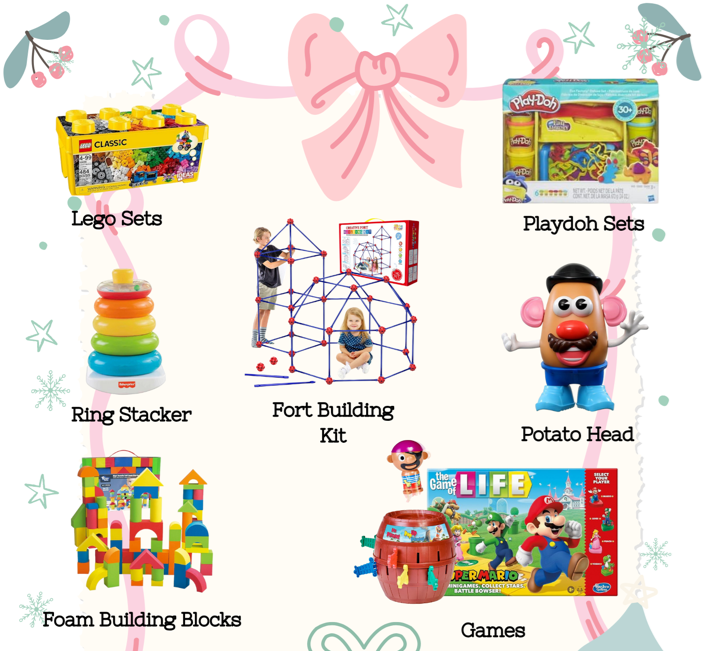
See our page of SLP reviewed and approved toys, books, and more!
Communication Is Identity
Children deserve more than rehearsed responses.
They deserve systems that allow them to protest, joke, question, reflect, and advocate. They deserve language that supports autonomy and identity.
Communication is not simply behavior.
It is neurological.
It is developmental.
It is cognitive.
It is social.
And because of that complexity, it deserves specialized expertise.
When we honor that complexity, we protect the child’s right to meaningful communication.
References
American Speech-Language-Hearing Association. (2007). Childhood apraxia of speech [Technical report]. https://www.asha.org/policy/TR2007-00278/
American Speech-Language-Hearing Association. (2016). Scope of practice in speech-language pathology. https://www.asha.org/policy/SP2016-00343/
American Speech-Language-Hearing Association. (n.d.). Augmentative and alternative communication (AAC). https://www.asha.org/practice-portal/professional-issues/augmentative-and-alternative-communication/
Anderson, V., Northam, E., & Wrennall, J. (2018). Developmental neuropsychology (2nd ed.). Routledge.
Cowan, N. (2010). The magical mystery four: How is working memory capacity limited, and why? Current Directions in Psychological Science, 19(1), 51–57.
Gathercole, S. E., & Alloway, T. P. (2008). Working memory and learning: A practical guide for teachers. SAGE Publications.
Kemmerer, D. (2022). Cognitive neuroscience of language (2nd ed.). Routledge.