
To schedule a free phone consult please follow the link here

Say at least 1,000 words to your child each week. On purpose.
If you’re feeling overwhelmed by speech goals, therapy carryover, flashcards, apps, and all the things you think you should be doing, let’s gently clear the table.
So what does 1,000 intentional words look like in real life?
Not scripted. Not exhausting. Not a constant monologue.
It’s simply adding more meaningful language to the moments you’re already sharing with your child.
Here’s a simple guide for weaving intentional words into everyday routines in a way that supports speech and language development, whether your child is speaking, using AAC, gesturing, or still finding their voice.
Talk more. Not louder. Not smarter. Just more.
Specifically: aim for at least 1,000 intentional words per week directed to your child.
That’s it. That’s the strategy. And it’s far more powerful than it sounds.
Why 1,000 Words Matters
Language doesn’t grow in a vacuum. It grows in exposure, repetition, rhythm, and connection.
Children learn language by:
Hearing words used meaningfully
Hearing the same words again and again
Hearing words paired with actions, objects, and emotions
Feeling safe and engaged while language is happening
Research in early language development consistently shows that the amount and quality of language a child hears directly impacts vocabulary growth and later communication skills. This is emphasized by organizations like the American Speech-Language-Hearing Association, which highlight modeling, repetition, and everyday interaction as core components of effective language support.
For children with speech delays, autism, apraxia, or complex communication needs, input comes before output. Always.
We cannot expect words to appear if they haven’t been heard enough to stick.
What Counts as “Words”?
This part is important because parents often underestimate themselves, these are what counts:
Words spoken directly to your child
Words spoken about what your child is doing
Narration, labeling, commenting, wondering
Repeated phrases and core words
Books read aloud
Songs, routines, scripts
This does not include:
Background TV
Conversations you’re having with someone else
Words said at your child instead of with them
This is about intentional language, not noise.
What Does 1,000 Words Look Like in Real Life?
Let’s break it down so it feels doable instead of daunting.
1,000 words per week is about:
140 words per day
Roughly 10–15 minutes of intentional talking
That’s not a marathon. That’s a stroll around the block.
Examples from a normal day:
During breakfast
“I see your cereal. Pour. Crunch crunch. You’re eating. More cereal? I’m pouring more. Bowl is full.”
During play
“You have the car. Go fast. Stop. Crash! Uh oh. Fix it. Ready… go!”
During dressing
“Shirt on. Arms up. Pull down. All done. You did it.”
During a book
“Dog is running. Run run run. The dog is happy. Look at the dog!”
Notice what’s missing?
No quizzing
No pressure
No “say ___”
Just language flowing alongside your child’s world.
If Your Child Uses AAC
This strategy is just as important, if not more.
Model words on their device while you talk
Don’t wait for them to press first
Use the same core words repeatedly: go, stop, more, help, want, like
Spoken language and AAC are not opposites. They’re teammates.
Your words give meaning to symbols. Symbols give power back to your child.
If Your Child Isn’t Responding Yet
This is where many parents quietly panic.
Please hear this clearly, Silence does not mean failure.
Language development is not transactional. You don’t insert words and immediately get speech in return. Sometimes language is soaking in quietly, stacking up, organizing itself behind the scenes.
Your job is not to pull words out.
Your job is to pour language in.
And consistency matters more than enthusiasm. A calm, steady stream beats occasional fireworks.
Make It Easier on Yourself
You do not need to:
Track every word
Sound like a therapist
Add extra activities to your day
You can:
Pick one routine a day to intentionally narrate
Repeat the same phrases every day
Use simple language
Talk even if your child doesn’t answer
If it helps, set a timer for 10 minutes and just be the narrator.
Why This Comes Before Academics
As tempting as worksheets and letters can be, communication comes first.
Language is the foundation for:
Literacy
Learning
Behavior regulation
Social connection
A child who understands language can access academics later. A child who is still building understanding needs more words, not more demands.
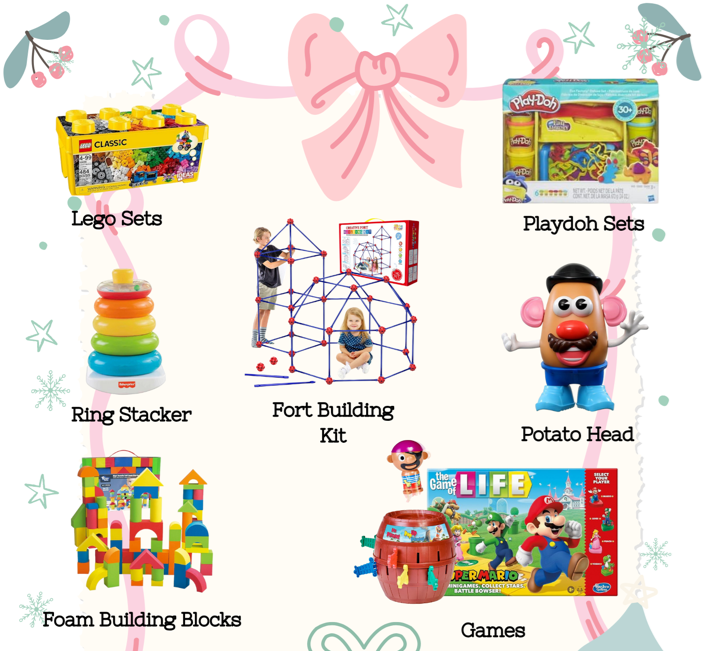
See our page of SLP reviewed and approved toys, books, and more!
The Takeaway
If you do nothing else this week, do this:
Say at least 1,000 intentional words to your child.
Not perfectly.
Not loudly.
Not with flashcards in hand.
Just consistently. Lovingly. On purpose.
You already have the most powerful speech tool in your house.
It’s your voice.
References
American Speech-Language-Hearing Association. (n.d.). Evidence-based practice in speech-language pathology.
https://www.asha.org/research/ebp/
American Speech-Language-Hearing Association. (n.d.). Coaching parents to foster their child’s expressive language skills.
https://leader.pubs.asha.org/do/10.1044/coaching-parents-to-foster-their-childs-expressive-language-skills
American Speech-Language-Hearing Association. (n.d.). 10 strategies to train parents and improve carryover for students using AAC.
https://leader.pubs.asha.org/do/10.1044/10-strategies-to-train-parents-and-improve-carryover-for-students-using-aac/full/
American Speech-Language-Hearing Association. (n.d.). Augmentative and alternative communication (AAC).
https://www.asha.org/practice-portal/professional-issues/augmentative-and-alternative-communication/