
To schedule a free phone consult please follow the link here

My Child Knows What They Want to Say but Can't Get the Words Out
Author: Isabella Knight M.S. CCC-SLP (Check Out Her Staff Page Here)
Have you ever watched your child try to tell you something and thought, “I know they know what they want to say, but they just can’t seem to get the words out?” Maybe they pause for a long time, use words like “that thing,” give very short answers, or become frustrated when they are trying to explain what happened. This can be related to a skill called expressive language.
What Is Expressive Language?
Expressive language is how we use words and sentences to share our thoughts, ideas, wants, needs, and experiences with other people. It includes being able to find the words we want to use, put those words together into sentences, answer questions, describe something, and tell others about what happened. For example, you may ask your child, “What did you do at school today?” and know that they remember their day, but their answer sounds more like, “Um...outside...Kyle...the ball kick.” Organizing and sharing this information may take more effort.
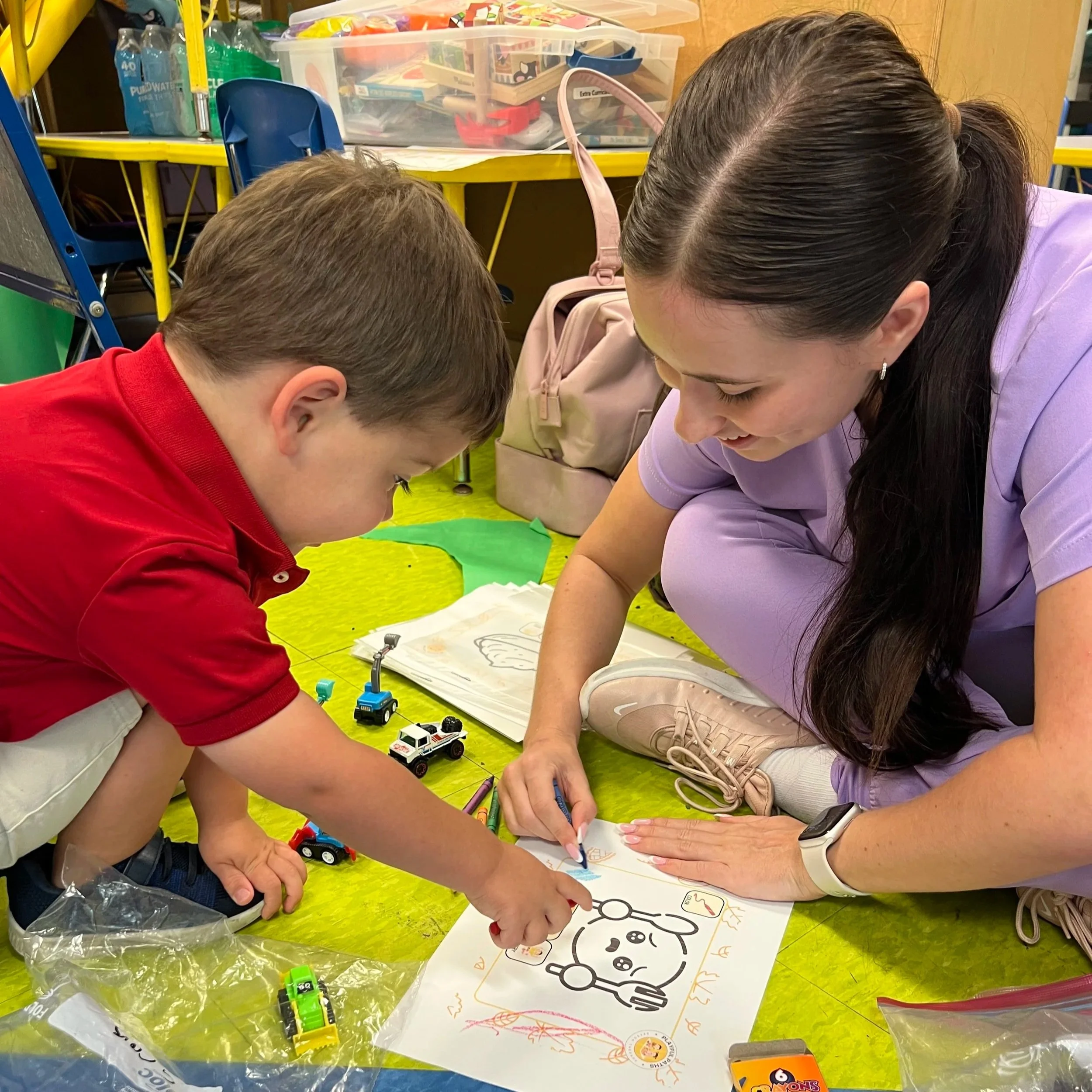
Understanding Language vs. Using Language
Parents may report that their child understands everything; however, understanding language and using language are related, but they are not the same skill.
Receptive language is what a child understands. Expressive language is how they communicate their own thoughts and ideas. A child may easily follow a direction such as, “Go get your shoes, put them by the door, and grab your backpack,” but have a much harder time answering, “What happened at recess today?” Expressive language difficulties can look like something different for each child. Some children use shorter sentences than expected, while others may have a hard time finding a specific word or organizing their thoughts when they are telling a story. They also frequently say “thing,” “that,” or “you know” when they cannot think of a word. They may give short answers even when you know they have more to say, leave words out of sentences, have trouble telling a story in the right order, become frustrated when others do not understand what they mean, and/or need extra time to answer open-ended questions
How Can You Help at Home?
One of the most helpful things you can do is give your child extra time to respond. It can be tempting to immediately finish their sentence, especially when you know what they are trying to say, but waiting a few extra seconds can give them the time they need to organize their thoughts.
You can also build on what your child already says. If your child says, “Dog running,” you might respond, “Yes, the big dog is running really fast!” This gives them a model of a longer sentence without requiring them to repeat it. If your child is stuck trying to find a word, offering a choice can also help. Instead of repeatedly asking, “What was it called?” you might say, “Was it an elephant or a giraffe?” When your child is trying to tell you a story, simple questions such as “Who was there?” “What happened first?” and “What happened next?” can help them organize their ideas.

Download our age appropriate check lists to give you a better idea about whether or not to reach out.
When Should You Talk to a Speech-Language Pathologist?
Every child develops at their own pace, but it may be helpful to speak with a speech-language pathologist if your child regularly becomes frustrated when trying to communicate, has difficulty explaining their thoughts, struggles to find words, uses much shorter sentences than other children their age, or has trouble telling stories and answering open-ended questions.
A speech-language pathologist can look at how your child understands and uses language and help determine where they may need additional support. The goal is not simply to get a child to “talk more.” The goal is to help them communicate what they are thinking more easily and successfully.
How Speech Therapy Can Help
At Playful Paths Speech Therapy, we help children build communication skills through supportive, individualized therapy that meets them where they are. If you have concerns about your child’s expressive language skills, a speech-language evaluation can help you better understand their strengths and determine whether additional support may be helpful.